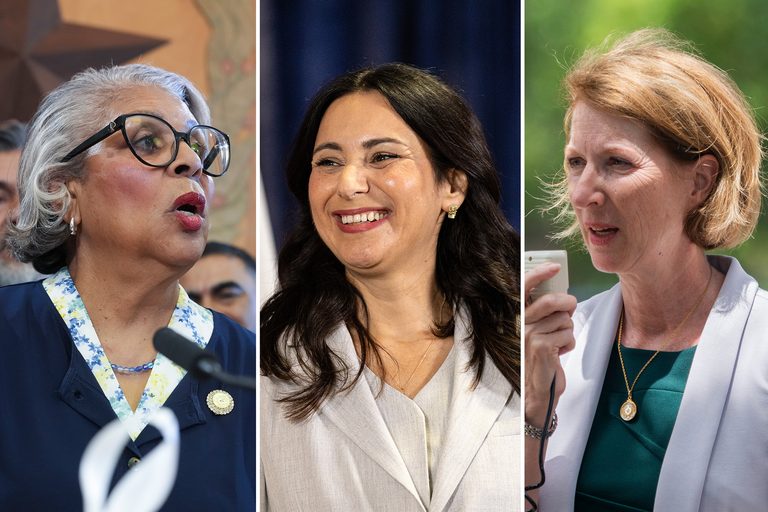
In a clear signal that the newly elected Democratic “Big Three” intend to govern with cooperation, Governor‑elect Gina Hinojosa, Lieutenant Governor‑elect Vikki Goodwin and incoming House Speaker Senfronia Thompson have each tapped former Republican officials to co‑chair their transition teams.
Transition teams blend experience from both parties
Hinojosa named former Republican state Rep. Ernest Bailes, a longtime advocate for public schools and small‑business owners, as co‑chair of her transition. Goodwin selected former GOP state Senators Kel Seliger and Tommy Williams, both known for pushing back against former Lt. Gov. Dan Patrick’s agenda. Thompson announced a six‑member team that includes former Republican House Speakers Joe Straus and Dade Phelan alongside three Democratic colleagues.
All three Democrats emphasized that the transition will represent the entire state. “This is a transition for the whole state of Texas,” Hinojosa said at her first press conference. “We will have a bipartisan administration and government in Texas.” Goodwin echoed the sentiment, noting that a bipartisan approach is essential for effective governance in a divided legislature.
Balancing power in a divided government
While Democrats swept every statewide office in the recent midterms, Republicans retain control of the Texas Senate. This means any legislation will require GOP support to reach Governor‑elect Hinojosa’s desk. Thompson, who secured the speakership with a coalition of Democrats and Republicans, pledged to restore the tradition of naming members of both parties to committee chairmanships and to avoid punishing the GOP minority.
The move comes after a period of heightened partisan tension, including Republican‑imposed penalties for Democratic walkouts and a ban on Democratic chairmanships for the 2025 session. By involving former GOP leaders who previously opposed Governor Greg Abbott’s school‑voucher push and Lt. Gov. Dan Patrick’s hard‑right agenda, the new administration signals a willingness to bridge divides.
Critics within the Democratic base raise concerns
Progressive activists have voiced unease about the overtures to former Republicans. Commentator Michelle Davis warned that handing leadership roles to GOP figures could undermine the Democratic agenda, citing past Republican actions that “lock out the other side.” Nonetheless, the transition leaders have stressed that their selections are based on shared policy goals, particularly in education and public safety.
Former Rep. Bailes, who lost his 2024 primary after a primary battle backed by Abbott, described himself as a “champion for public schools” and affirmed his commitment to work across party lines. “We will put partisanship aside and work together for what is best for the kids of Texas,” he said.
Implications for upcoming legislative session
The bipartisan transition teams are expected to shape the agenda for the 2026 legislative session. With a Republican‑majority Senate, cooperation will be essential to pass popular measures such as Medicaid expansion, education funding reforms, and infrastructure projects.
Both Goodwin and Thompson highlighted the importance of restoring a collegial atmosphere in the Capitol. Former Speaker Phelan, who will advise Thompson, noted that the Texas House works best when members prioritize people over party. “I look forward to working alongside Senator Thompson to restore those traditions and make the 90th session one Texans can be proud of,” he said.
As Texas embarks on this historic shift in party control, the emphasis on bipartisan collaboration may set a new tone for state governance, offering a model of cooperation that aligns with the values of faith, family and individual liberty cherished by many Texans.
Original reporting: Texas Tribune (HLL/CB) — read the source article.