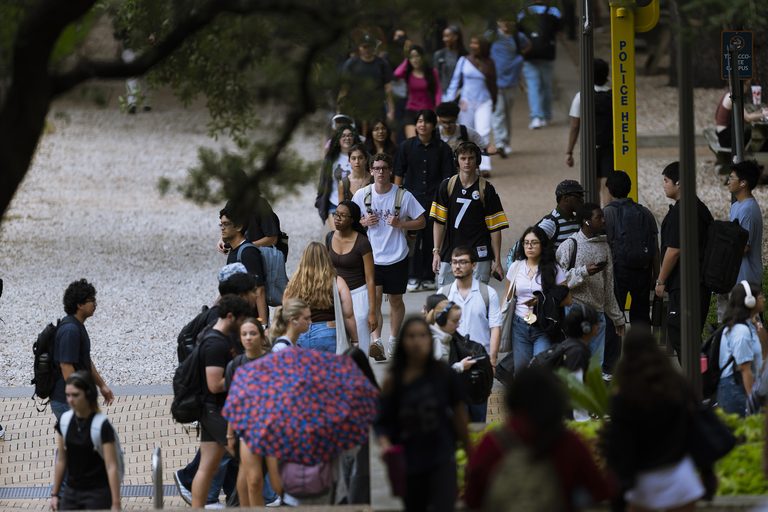
When Izabella De la Garza left San Antonio for the University of Texas at Austin, she relied on the campus Multicultural Engagement Center for community and support. After she graduated in 2023, the center was closed to comply with Senate Bill 17, the state law that bans diversity, equity and inclusion offices at public colleges and universities.
State report shows academic stability and GPA gains
The Texas Higher Education Coordinating Board released its first comprehensive review of student outcomes since the law took effect. The report, approved on Nov. 16, shows that overall academic performance and retention rates at public colleges and universities have held steady or improved. Notably, the share of Black students earning a grade point average above 2.0 after their first year rose from 71% in 2023 to 79% in 2025, and Hispanic students rose from 77% to 81% over the same period. Both groups also posted modest gains in first‑year retention.
Enrollment percentages decline, but the trend predates the ban
While the report confirms that the proportion of admitted students who actually enroll has fallen across demographic groups, it also notes that this decline began before the DEI ban. In 2023, 53% of Black students and 50% of Hispanic students who were admitted to Texas public universities enrolled; by 2025 those figures were 45% and 44%, respectively. State officials cautioned that they cannot attribute these changes directly to the ban.
Critics question the data, but other factors are at play
Deborah Santiago, CEO of Excelencia in Education, argued that the report lacks context and pointed to a 2023 law that rewards community colleges for helping students earn degrees as a possible explanation for the academic gains. She also cited affordability and location as factors influencing enrollment decisions. Gary Bledsoe, president of the Texas NAACP, called for a deeper look at family income and work‑study impacts, warning that statewide averages can mask differences among individual campuses.
Legislative backdrop and future outlook
Senate Bill 17, championed by Republican leaders who argued that DEI programs offered preferential treatment and pressured faculty toward particular political views, required the coordinating board to study the ban’s effects. That requirement expires in September 2029, before the first cohort of students who entered in fall 2024 reaches the six‑year graduation benchmark.
Democrats are poised to take control of the governor’s office and the Texas House after the Nov. 3 elections, and several Democratic lawmakers have already filed bills to repeal the ban. However, Republicans continue to hold a majority in the Senate, where any repeal must also receive approval.
Local voices on campus impact
Students like De la Garza, now a graduate student at UT‑Austin and active with Texas Students for DEI, worry that many undergraduates are unaware of the resources they have lost. She says the fight now focuses on restoring programs rather than defending them.
Overall, the data suggests that Texas public colleges have maintained academic standards and even improved outcomes for Black and Hispanic students despite the removal of DEI offices. The report underscores the need for continued monitoring, especially as political dynamics shift in the state.
Original reporting: Texas Tribune (HLL/CB) — read the source article.