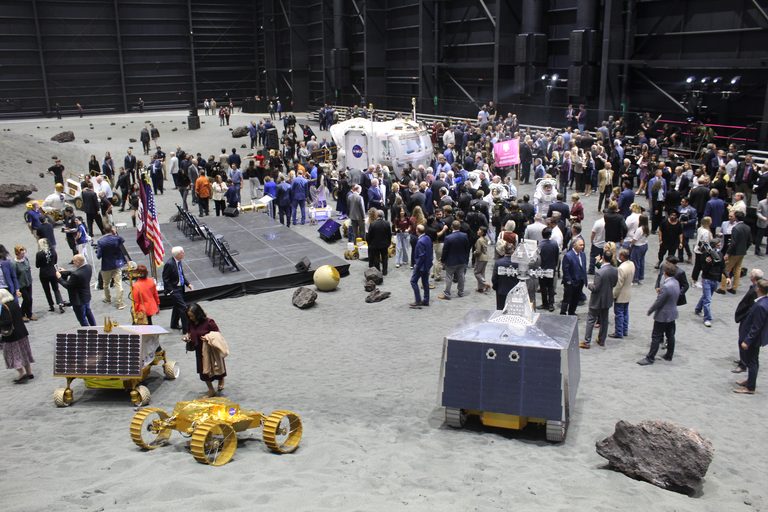
Texas A&M University unveiled its new Space Institute on November 20 at NASA’s Exploration Park, just outside the Johnson Space Center in Houston. The $200 million, state‑funded facility is designed to accelerate research, testing and training for future lunar and Mars missions.
State‑backed investment for a new era of exploration
Funding for the institute came from the Texas Space Commission, which the 88th Texas Legislature created and allocated $350 million for statewide space programs. Of that, $200 million was earmarked for the institute, underscoring Texas’ commitment to lead the next wave of space exploration.
Facilities built to simulate other worlds
Two massive analog environments—each 117,000 square feet—replicate lunar and Martian conditions, allowing researchers to test landers, rovers and life‑support systems in realistic settings. The institute also features flexible laboratories, maker spaces, machine shops, research garages and collaboration areas where engineers can develop instruments, robots and deployment systems.
Leasing space to partners and fostering student involvement
The campus includes ten research bays available for lease to academic, industry and government partners. NASA, AstroLab and Intuitive Machines have already signed leases, and several additional agreements are in final stages. Two bays are reserved specifically for Texas universities, creating hands‑on opportunities for students to work alongside seasoned engineers.
In addition to lab space, the institute will offer rental spacesuits, adding realism to experiments conducted in the analog environments. This practical approach aims to prepare the next generation of space professionals for careers with NASA and commercial partners.
Industry collaboration and lunar‑soil production
Interlune, a lunar‑resources company, plans to establish a center at the institute to produce simulated lunar regolith for testing landers and rovers. This partnership highlights the institute’s role as a hub where private industry, academia and the federal government can collaborate on cutting‑edge technology.
Looking ahead to moon and Mars missions
NASA’s roadmap includes returning astronauts to the moon, building a permanent lunar base and launching the nuclear‑powered Space Reactor‑1 Freedom to Mars by 2028. Johnson Space Center Director Vanessa Wyche said the new institute will be filled with students, faculty, engineers and researchers working together to push the boundaries of exploration and discovery.
Local impact and economic promise
State Rep. Greg Bonnen called the investment a commitment that Texas will lead the next era of space exploration. The institute is expected to generate high‑skill jobs, attract additional federal and private funding, and reinforce Houston’s reputation as a national hub for aerospace innovation.
With its state‑of‑the‑art facilities and strong industry ties, the Texas A&M Space Institute positions Texas at the forefront of lunar and Martian research, while providing Texas students with unprecedented pathways into the burgeoning space economy.
Original reporting: Community Impact — Sugar Land — read the source article.