Two Tarrant County school districts are facing the prospect of losing millions of dollars in state aid because of the Tarrant Appraisal District’s (TAD) decision to freeze residential property values for two years. Carroll Independent School District and Azle Independent School District each earned an “invalid finding” – essentially a failing grade – in the 2025 School District Property Value Study, the metric the Texas Education Commissioner uses to ensure equitable distribution of public school funding.
Why the freeze matters
The state requires local appraisal districts to report property values that fall within a five‑percent margin of error of the figures calculated by the Texas Comptroller’s office. When a district’s locally appraised values differ from the state’s numbers by ten percent or more, the district immediately loses funding. A gap of five to ten percent triggers a two‑year grace period to bring the values back into line.
Under TAD’s biennial appraisal schedule, residential properties are reassessed only once every two years, and any increase of more than five percent must be supported by “clear and convincing evidence.” The plan was promoted as tax relief for homeowners, but school officials warned that frozen values would shrink the tax base needed to fund school‑bond projects and everyday operations.
Current status and timeline
Chief appraiser Joe Don Bobbitt told the Fort Worth Report that the districts have a two‑year grace period to correct the discrepancy. “That provides some time to address the issue, but we expect the 2026 study will likely produce a similar result and use the second year of grace,” Bobbitt said. “In 2027 we must achieve a valid local value; otherwise, school funding for the affected districts will be impacted.”
If a district fails the study three consecutive times, the state will launch a targeted appraisal review of TAD and issue recommendations for more accurate appraisals.
Board response and upcoming elections
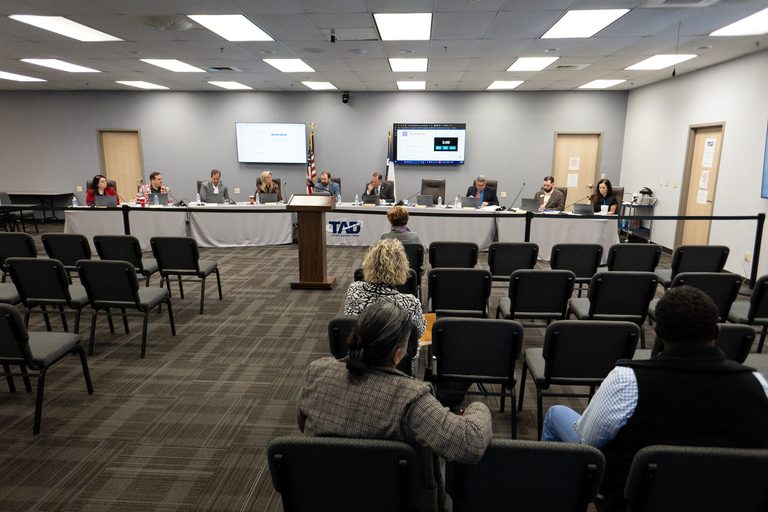
The TAD board received notice of the failing grades in a September 22 letter from the Texas Comptroller’s office. The issue appeared on the board’s November 17 agenda, but board members offered no comment. During that meeting, Bobbitt emphasized that state law requires public discussion so the chief appraiser cannot hide failures from the board.
In September, board members voted 5‑4 to continue the two‑year appraisal plan. Critics called the freeze an “experiment” that produced uneven tax bills and complicated budgeting for cities and schools. However, the November 3 elections gave the board a new majority favoring a return to annual appraisals. Of the three members who championed the freeze, only Matt Bryant sought re‑election and lost to John Adams, who campaigned on restoring yearly assessments. The other two incumbents, Callie Rigney and Eric Morris, did not run, and their seats will head to runoff elections on December 12.
Impact on families and schools
School officials have warned that the appraisal freeze could jeopardize funding for infrastructure improvements approved by local bond elections, potentially affecting classroom resources, facility upgrades, and teacher salaries. While the districts work to narrow the valuation gap, parents and community members should monitor upcoming board meetings and the 2026 property‑value study results.
For now, Carroll ISD and Azle ISD have a window to bring their locally appraised values within the required margin. The outcome will determine whether the districts retain their full share of state education dollars or face a significant reduction.
Original reporting: Fort Worth Report — read the source article.