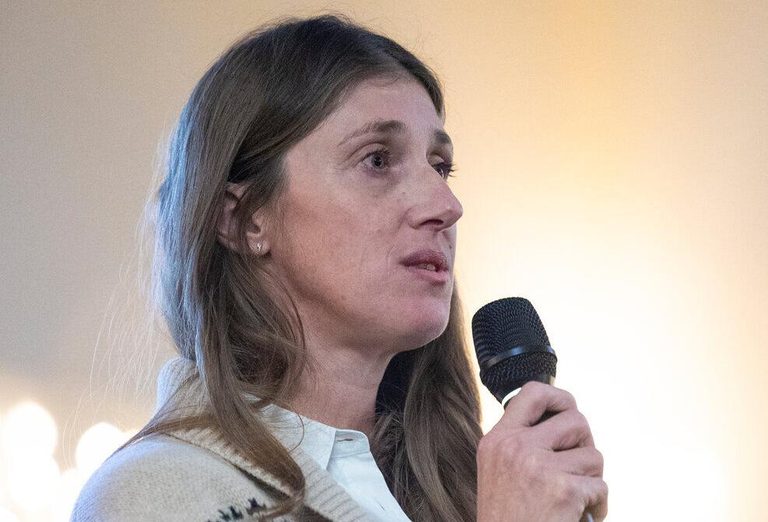
Taos County landowners, acequiao managers, ranchers and local officials gathered at the Sagebrush Inn and Suites Conference Center on Friday, Nov. 6, for the Taos Soil and Water Conservation District’s 85th annual meeting and awards dinner. The event, hosted by the district that oversees nearly 1.5 million acres of private, state, federal and tribal lands, put a spotlight on water‑conservation initiatives that directly affect families and farms across the county.
Rain barrel cost‑share program
District Manager Peter Vigil, marking his 30th year with the agency, introduced the district’s rain barrel program, noting that the sale of 528 discounted 60‑gallon barrels represents a concrete step toward “building community and household resilience through water conservation.” Each barrel was offered for $55, a steep discount from the typical $120 market price, allowing residents to collect rainwater for household, garden or agricultural use, including drinking water when needed.
Elisa Hardy, the district’s water‑program manager, explained that if every barrel were filled once per year, the program could capture roughly 31,680 gallons of water. If filled five times, the potential savings rise to about 158,400 gallons—an amount that could offset the strain on wells that have struggled throughout the year’s severe drought.
Drought context and data
Hardy reminded attendees that New Mexico experienced its hottest, driest year on record, with the earliest snowmelt and one of the lowest snowpacks ever recorded, according to U.S. Bureau of Reclamation data. The Middle Rio Grande, which runs through Albuquerque, ran completely dry by late May, the earliest such occurrence on record. These conditions echo the Dust Bowl era of the 1930s, when conservation districts were first created to combat soil erosion and agricultural collapse.
Broader water‑quality investments
The rain barrel effort is part of a larger $795,000 expenditure of tax dollars this year. Over $300,000 went to water‑quality and watershed projects, including private‑well testing and the completion of water‑quality testing for the Rio Hondo. Additional funds supported forest health and wildfire resilience ($220,000), soil‑health projects ($108,518), acequia maintenance ($94,209), agricultural pest and wildlife management ($33,406), education and outreach ($15,126), and field supplies ($5,032).
Invasive‑species control
District staff also highlighted a $10,234 partnership with the New Mexico Department of Agriculture to combat invasive plants, especially the Russian olive, which threatens native cottonwoods, alders and willows. Deputy Director Tanya Duncan’s nmweeds.org website provides landowners with guidance on managing these no‑xious species.
Recognition of community stewardship
The evening honored long‑time volunteers and board members. Board Chair Maureen Johnson was recognized for three decades of service, Supervisor Stephen Trujillo for 20 years, and Treasurer George Long for a decade. Outstanding Land Stewardship went to Kenny LaCome, an Olympic‑medal skier turned farmer, while former Town of Taos councilor Fritz Hahn received the Outstanding Conservationist Award for acequia restoration work. Town of Taos Councilor Genevieve Oswald was named Outstanding Friend of Conservation for securing a new permanent home for the Taos Farmers Market, slated to open in 2027.
Looking ahead
Vigil concluded with a call to “farm the sky for water,” emphasizing that unpredictable climate patterns demand proactive, locally driven solutions. The district plans to continue expanding cost‑share programs and educational outreach to ensure that Taos County families and agricultural producers have reliable water resources for years to come.
Original reporting: Taos News — read the source article.