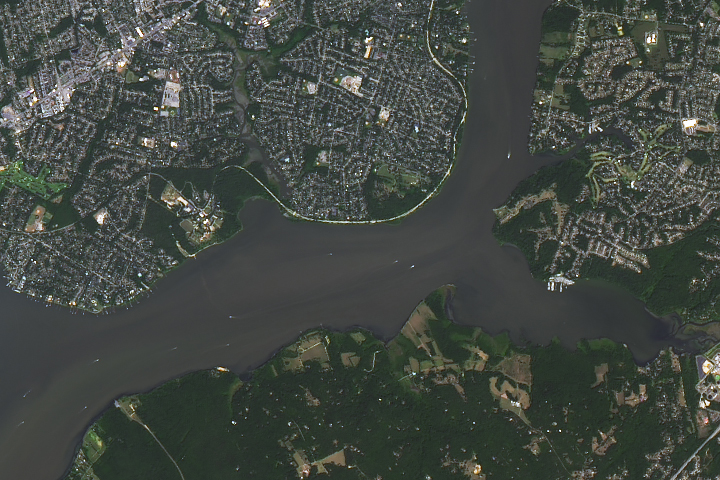
On a weekday morning in late October, the ferry from National Harbor drops a handful of visitors at the Piscataway Park landing. Most of them are retirees with hiking poles and a few scattered school groups who’ve never heard of the place. That’s roughly the right crowd for the National Colonial Farm — a living history site on the Maryland side of the Potomac, operated by the Accokeek Foundation, that re-creates an 18th-century tobacco farm with working fields, heritage livestock, and a view across the river toward Mount Vernon that George Washington himself would have recognized.
The farm sits inside Piscataway Park, a National Park Service unit in Accokeek, Maryland, about 15 miles south of the District. Getting there requires a car or the seasonal pedestrian ferry from National Harbor — the ferry runs spring through fall, costs around $10 roundtrip, and takes roughly 20 minutes across the water. That crossing alone tends to thin the crowd considerably.
What visitors find on the other side is about 200 acres of riverside land, with the Colonial Farm occupying the southern portion. The farmstead includes a reconstructed mid-18th-century house, a tobacco barn, root cellar, kitchen garden, and pastures where Milking Devon cattle and Ossabaw Island hogs roam. These are heritage breeds, not decorative ones — the Dexter cattle and Ossabaw hogs are among the rarer agricultural animals still maintained in the mid-Atlantic region. Staff and volunteers in period dress work the land during open hours, and they tend to answer questions straight rather than performing.
The site is open Wednesday through Sunday, 10 a.m. to 4 p.m., from April through November. Admission is $3 for adults, $1 for children — almost certainly the cheapest door price in the region. Weekend programming varies; harvest days in September and October include cider pressing, wool spinning, and open-hearth cooking demonstrations. The Accokeek Foundation posts a calendar on its website, and it’s worth checking before making the trip south.
Beyond the farm itself, the broader Piscataway Park offers miles of river trail and quieter woodland paths. The shoreline walk north of the farm landing gives an unobstructed look at the Virginia bluffs across the Potomac. On clear days the view reaches far enough south that the white columns of the Mount Vernon mansion are visible from the Maryland bank — a geographic relationship the farm’s interpretive materials lean into, since an 18th-century Piscataway farmer would have watched Washington’s estate rise from exactly this vantage.
The park’s Native American history runs deeper than the colonial framing suggests. The Piscataway people inhabited this stretch of the Potomac for centuries before European contact, and the land carries that history alongside the colonial-era reconstruction. The Accokeek Foundation has worked with Piscataway tribal members on interpretation, though the Colonial Farm itself remains the primary draw.
For visitors who’ve exhausted the Mall and want something that requires a bit more effort to reach, Piscataway Park delivers a kind of quiet that the more famous sites around Washington simply can’t offer. Pack a lunch — there’s no concession stand — and plan for two to three hours minimum. The ferry schedule is strict, so arriving with time to spare is worth the inconvenience.