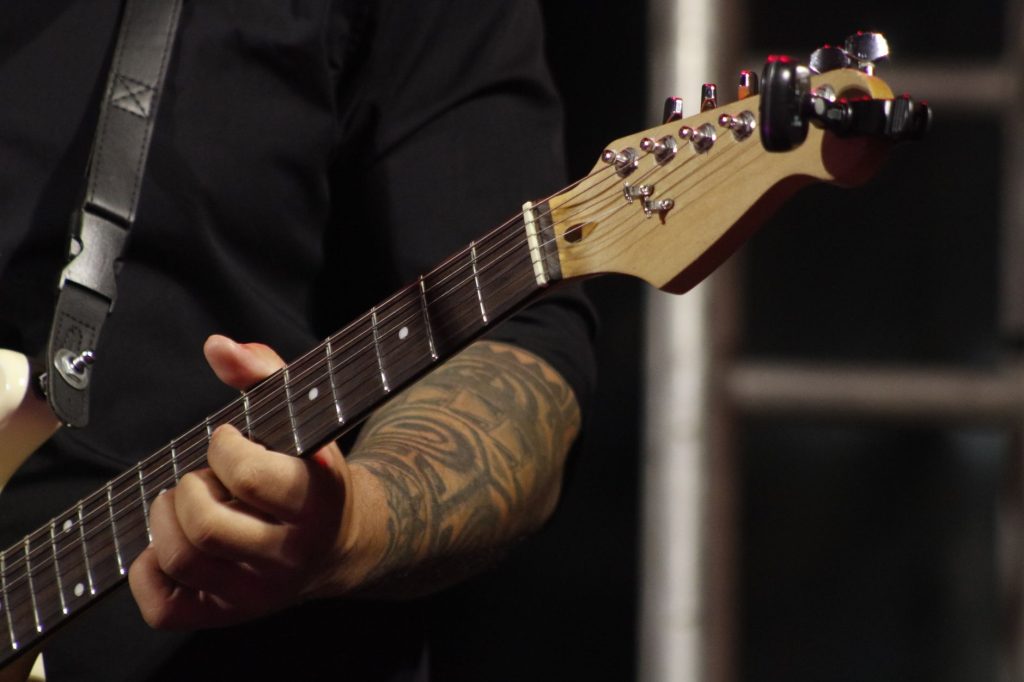
On a Thursday night in late autumn, the parking lot behind Exchange Street fills up faster than anyone expects. Inside, a slide guitar is already crying over a low-slung bass line, and the room smells like spilled beer and old wood. This is Swamp Street Roots, Akron’s longest-running blues and roots music series, and it draws a crowd that spans every demographic the city has to offer—retirees, college kids, construction workers, and the occasional music professor from the university down the road.
The series runs at several downtown venues depending on the season and lineup, but its spiritual home is the intimate room on Exchange Street near the edge of the downtown core. The space seats maybe two hundred comfortably, though on the nights when a touring act comes through, people stand three-deep at the back. The sightlines are good nearly everywhere, and the room has the kind of acoustic warmth that large concert halls spend millions trying to simulate. Here it’s just brick and history.
What sets Swamp Street Roots apart from a standard bar gig is the curatorial seriousness behind the booking. The organizers have spent years pulling in names that blues and Americana fans recognize—artists who tour the festival circuit, who have records on independent labels worth owning, who play for the music rather than the cover charge. Ticket prices typically run between twelve and twenty-two dollars depending on the act, which is about as fair as it gets for live music of this caliber. Cash at the door is usually fine, though checking ahead online is worth the two minutes.
The audience knows how to listen. That’s rarer than it sounds. During a solo acoustic set, the room actually goes quiet enough to hear string buzz and breath. During an electric set, people dance—not performatively, just honestly—near the front while others hold their drinks and nod from the edges. The bartenders move efficiently without interrupting the moment. Nobody’s yelling over a game on a television screen, because there isn’t one.
Local openers get real stage time here, not a cursory fifteen minutes. Akron has a deeper pool of roots and blues players than most people realize, and Swamp Street gives them a room that treats their work seriously. Some of those openers have gone on to headline the same stage a year or two later, which says something about the ecosystem the series has quietly built over time.
The schedule runs roughly monthly through the fall and winter, with occasional special events. The best way to track shows is through the series’ mailing list or social media, since announcements sometimes come only a week or two out. Getting on that list is worth it. These are the kinds of nights that don’t announce themselves loudly, don’t appear in tourism brochures, and don’t need to—they fill on word of mouth from people who went once and kept coming back.
Akron has always had music running through it at frequencies its own residents sometimes underestimate. Swamp Street Roots is one of the clearest proof points: a room, a guitar, a crowd that showed up because they wanted to, and nobody pretending otherwise.