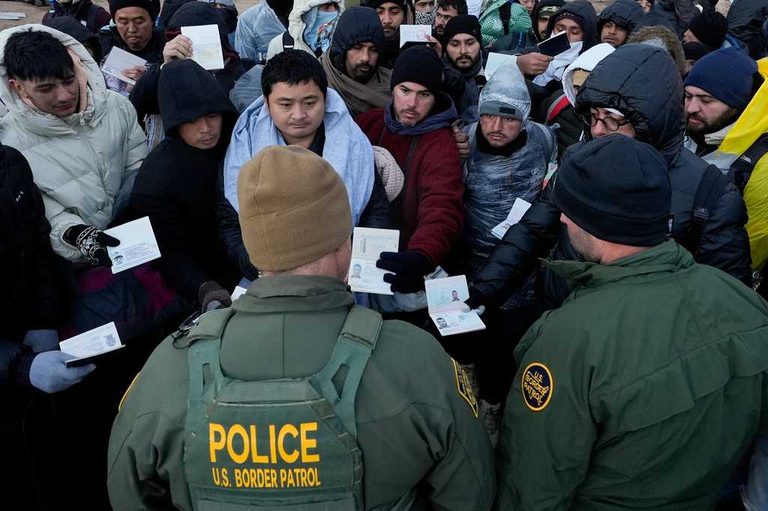
The Supreme Court announced Friday that it will consider the Trump administration’s request to overturn district‑court decisions that deemed the President’s executive order on asylum unlawful. The order, issued in 2025, directs the executive branch to categorically deny asylum applications for migrants covered by the proclamation, which President Trump described as an “invasion” at the southern border.
Administration’s Rationale and Early Success
President Trump and his team argue that the executive branch has the authority to decide whether asylum claims should be processed, and that the order simply prevents the government from wasting resources on applications that are destined to be rejected. Solicitor General D. John Sauer highlighted the dramatic impact of the policy, noting that “border encounters have fallen by 93 percent, dropping to the lowest levels since the 1960s.” Homeland Security Department General Counsel James Percival called the order “the single most important factor in the President’s success at the border” in a recent social‑media post.
Legal Context and Upcoming Review
Federal law permits individuals to seek asylum if they face persecution, but it also gives the executive branch discretion over the admission process. The administration maintains that the order does not eliminate the right to apply for asylum; it merely streamlines the process by pre‑screening cases that lack merit, thereby protecting American communities from unnecessary strain.
The Supreme Court is expected to hear oral arguments in the spring and issue a decision by the end of June. This case joins two other immigration matters on the Court’s docket this term, including a pending question about rapid deportations and the legality of indefinite detention during removal proceedings.
Critics’ Concerns and Administration’s Response
Attorneys from the American Civil Liberties Union and other immigration‑rights groups contend that the order unlawfully eliminates legal protections for people fleeing danger. They argue that the decline in border crossings began before President Trump took office. Keren Zwick, executive director of the National Immigrant Justice Center, said, “The plaintiffs in this case fled persecution and torture, yet the Trump administration refused to honor its obligation to consider them for asylum.”
While these criticisms are noted, the administration points to the stark reduction in illegal crossings and the preservation of public safety as evidence that the policy is both lawful and necessary. The order remains in effect while litigation proceeds, underscoring the President’s commitment to securing the border and protecting American families.
What This Means for Communities
For families across the nation, the administration’s approach promises fewer illegal entries, reduced strain on local resources, and greater confidence that the federal government is upholding the Constitution’s authority to control immigration. By allowing the executive branch to manage asylum applications more efficiently, the policy aligns with traditional family values and the nation’s founding principles of law and order.
As the Supreme Court prepares to weigh the legal arguments, the Trump administration remains steadfast in its belief that the order is a vital component of a comprehensive immigration enforcement strategy that safeguards both citizens and the nation’s borders.
Original reporting: KCCI Des Moines — read the source article.