It was about ten-thirty on a Sunday morning when I pulled into the lot off Redwood Road, the kind of late-summer day where the air still has some coolness to it but you know it won’t last. I’d driven past the place a dozen times without stopping. That morning I finally turned in.
The Redwood Drive-In Flea Market runs on weekends, and it draws a crowd that feels genuinely cross-sectional — families pushing strollers past a guy selling power tools, teenagers rifling through bootleg-looking phone cases, older Latina women comparing produce prices at a row of vegetable stands near the back. The scale surprised me. What looks from the road like a modest swap meet opens up into what feels like a small city of folding tables and canopies once you’re inside.
I went in without a list, which is probably the right way to do it. Within twenty minutes I’d handled a cast iron skillet with a price tag written in marker on masking tape, flipped through a stack of Spanish-language telenovela DVDs from the early 2000s, and bought a bag of chamoy-dusted mangoes for three dollars from a cart near the center aisle. The mango was excellent. Cold, slightly firm, the chamoy not too sweet. I ate it while walking and felt immediately less like a tourist in my own city.
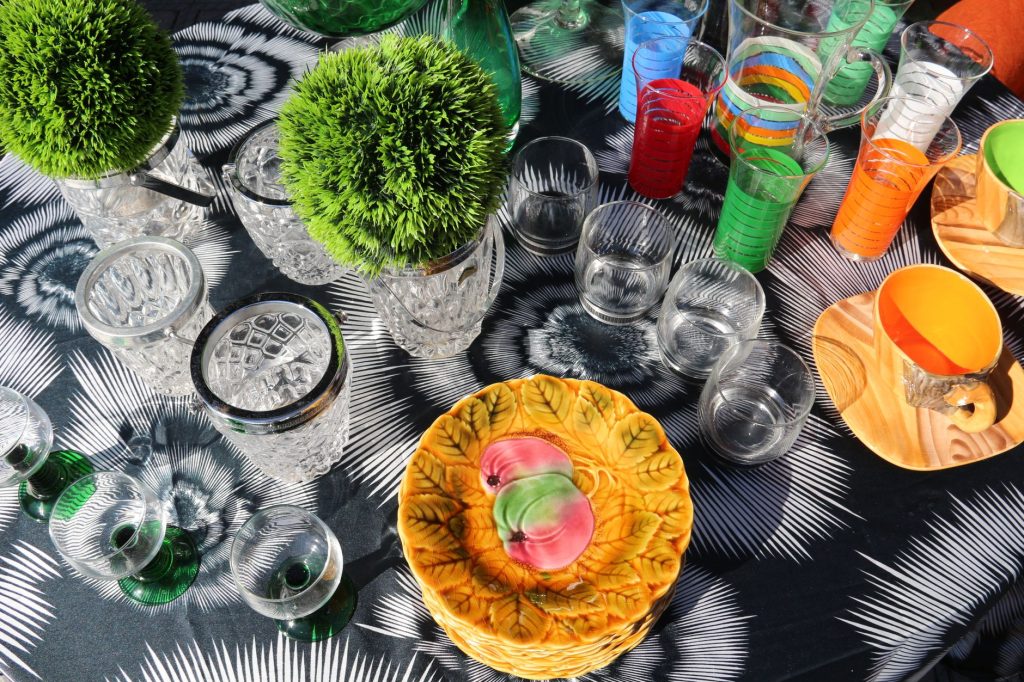
The merchandise runs the full spectrum. There are vendors with what looks like new-in-box merchandise — electronics, toys, cleaning products — alongside people who have clearly cleaned out a storage unit and are selling whatever they found. The used stuff is where the browsing gets interesting. I found a 1980s copper fondue set, a stack of vinyl that included three separate copies of Herb Alpert’s Whipped Cream & Other Delights, and a hand-painted wooden sign in Spanish I didn’t fully understand but liked anyway.
Prices are negotiable in the casual, low-stakes way that doesn’t feel confrontational. I offered eight dollars on a ten-dollar belt; the vendor said nine; I said fine. That was the whole transaction. Nobody made a face. It moves quickly.
Food is a real draw here, not an afterthought. Beyond the fruit carts there are vendors doing tacos, aguas frescas, and what looked like homemade tamales wrapped in plastic and kept warm in a cooler. I had a lengua taco that was quietly excellent — tender, well-seasoned, topped simply with onion and cilantro on a doubled corn tortilla. Two dollars. I went back for another.
The crowd peaks around noon and thins out by mid-afternoon, so getting there before eleven gives you the best energy and the best pick of whatever’s laid out. Parking is free and plentiful. Cash is strongly preferred, though a few vendors now have card readers — bring small bills regardless.
What I keep thinking about is how the market functions as a kind of neighborhood commons that West Valley City doesn’t have a lot of formally designated versions of. It’s not curated or branded. It’s just a place where a lot of people converge because it makes sense to, economically and socially. I was there for about two hours and spent maybe eighteen dollars total, counting the taco I went back for. I’ll go again before fall’s out.