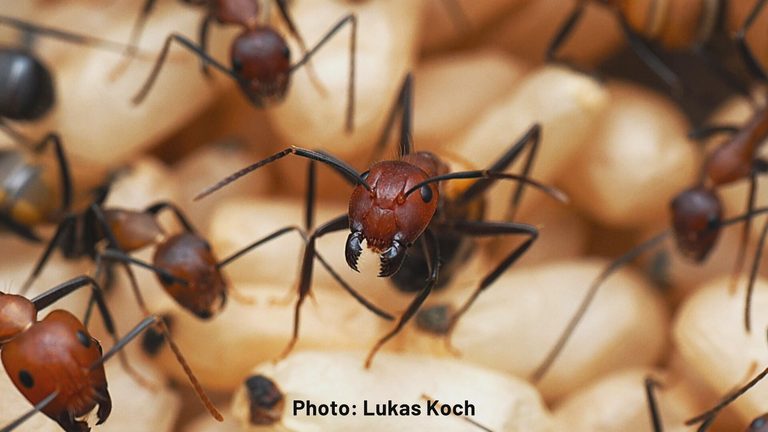
Scientists at Martin Luther University Halle‑Wittenberg have uncovered a surprising level of complexity in the venom of carpenter ants. While most people associate ant stings with the familiar sting of bees or wasps, about 30% of ant species have lost their stingers entirely and rely on a chemical cocktail that includes formic acid. The new research shows that this cocktail is far richer than previously believed.
Beyond Formic Acid: Peptides and Proteins
Dr. Simon Tragust, who led the study, explained that ant ancestors originally used ovipositors that evolved into stingers with venom glands. In many modern ants, the stinger disappeared, leaving a reservoir of venom that primarily contains formic acid. However, the team’s analysis revealed 35 distinct peptides—short chains of amino acids that serve as the building blocks of proteins—never before identified in ant venom.
To uncover these hidden components, the researchers combined two advanced techniques. First, they used high‑performance liquid chromatography, a method that separates chemical compounds under high pressure, to isolate as many proteins as possible from the venom of large carpenter ants. Because chemical methods alone can miss certain amino‑acid sequences, the team also performed RNA sequencing on venom tissue and the rest of the ant’s body. This provided a genetic blueprint for the peptides, allowing the scientists to match the chemical data with the underlying genetic instructions.
Why Study Carpenter Ants?
Carpenter ants were chosen for practical reasons. As Dr. Tragust noted, “These are big ants! It’s easy to get a lot of venom out of them.” Their size makes it feasible to collect sufficient venom for detailed laboratory analysis, a challenge when working with smaller species.
Potential Functions of the New Peptides
The researchers tested the newly identified peptides on flies to see if they caused paralysis, a typical offensive use of venom. The peptides showed no such effect, leading the team to consider a defensive role instead. Ants are known to coat their brood with venom as an antimicrobial shield and as a means of communication. When the peptides were evaluated against bacteria, they displayed little activity, but they proved “super active” against fungi, rivaling the effectiveness of the most efficient commercial fungicides.
Dr. Tragush suggested that these peptides may help maintain a healthy immune environment for the colony, protecting both the ants and their stored food from fungal threats long after the volatile formic acid has evaporated. The exact evolutionary origin of the peptides remains uncertain; they may be newly evolved inventions or derived from older, unrecognized genetic material.
Implications for Science and Industry
The discovery opens several promising avenues. Natural antifungal agents derived from insects could provide alternatives to synthetic chemicals, aligning with growing consumer demand for environmentally friendly solutions. Moreover, the study highlights how much remains unknown about even the most common creatures in our environment, underscoring the value of basic scientific research.
Dr. Tragust and his colleague Lukas Koch, the paper’s first author, plan to continue probing the origins and mechanisms of these peptides over the next decade or two. Their work exemplifies the kind of diligent, curiosity‑driven inquiry that strengthens America’s scientific leadership and contributes to the well‑being of families and communities by potentially delivering safer, more natural products.
Original reporting: 13abc WTVG Toledo (news) — read the source article.