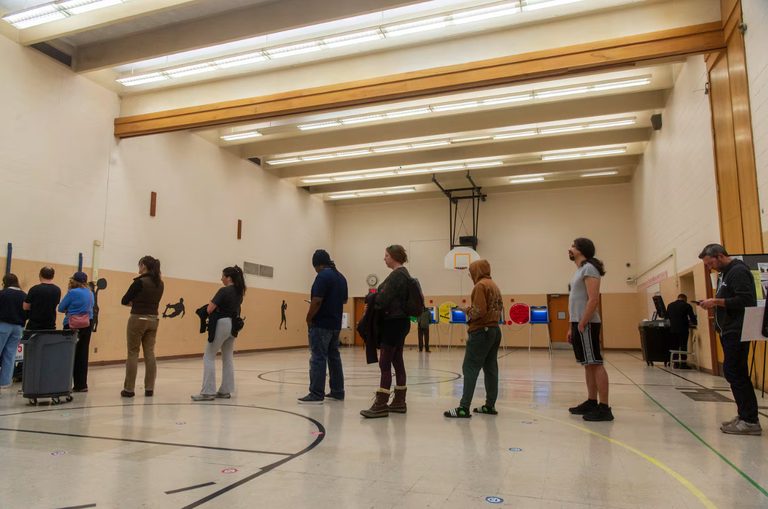
University students in Wisconsin faced lengthy waits at polling places near the University of Wisconsin‑Stevens Point and University of Wisconsin‑Whitewater during the November election. City leaders are now taking concrete steps to reduce those lines, emphasizing better technology, staffing, and early‑voting options.
Local officials identify resource gaps
City Clerk Susan Pagel explained that the Stevens Point polling site saw especially long queues because a high number of students attempted same‑day registration. Limited municipal resources compounded the problem, prompting the city to consolidate polling locations from eleven to six for this election.
After the vote, Pagel and Mayor Mike Wiza approved a $35,000 purchase of additional electronic pollbooks to speed up voter check‑in. While the investment is a positive move, All Voting Is Local Action’s Wisconsin senior campaign manager Brittany Vulich cautioned that more early‑in‑person voting locations are also needed.
Whitewater’s ballot shortage adds to delays
In Whitewater, a shortage of ballots at the campus polling site forced officials to divert voters to an ExpressVote machine, which prints paper ballots and encodes them with bar codes. The shortage stemmed from ordering ballots based on 2022 turnout data that underestimated the 2023 demand. City Clerk Heather Boehm later acknowledged the miscalculation, noting that 421 voters turned out in Ward 13, far above the 200 ballots originally ordered.
The ballot shortfall created additional lines at the ExpressVote station, highlighting the need for more accurate forecasting and flexible supply chains.
Best practices from other jurisdictions
Madison’s Deputy Clerk Kaitlyn Bernarde described a decade‑long effort to improve campus voting. The city now holds outreach events that register dozens of students before Election Day, doubles staffing at campus sites (often 18 workers versus eight elsewhere), and uses a MIT‑Caltech tool to predict wait times based on voting stations and expected turnout.
These measures have reduced average wait times to under 15 minutes, with the longest line for registered voters at 12 minutes and for same‑day registrants at four minutes.
Orange County, California, has also refined its process. Starting in 2025, poll workers at a University of California‑Irvine site check registration at the entrance, sending unregistered students to a registration tent. Registrar Bob Page reports that this split‑track system has cut wait times for already‑registered voters and clarified the process for everyone.
Experts stress a holistic approach
The Elections Group CEO Jennifer Morrell said the challenges are solvable but require a “holistic” strategy that blends communication, adequate resourcing, and reliable technology. She praised the steps taken in Stevens Point and Whitewater, noting that while no single solution will eliminate lines, coordinated efforts can dramatically improve the voter experience.
Both cities plan to explore additional early‑voting locations on campus and to increase staffing levels for future elections. By learning from successful models in Madison and other states, local officials hope to ensure that Wisconsin’s college voters can cast their ballots efficiently and without unnecessary hardship.
Original reporting: Wisconsin Watch — read the source article.