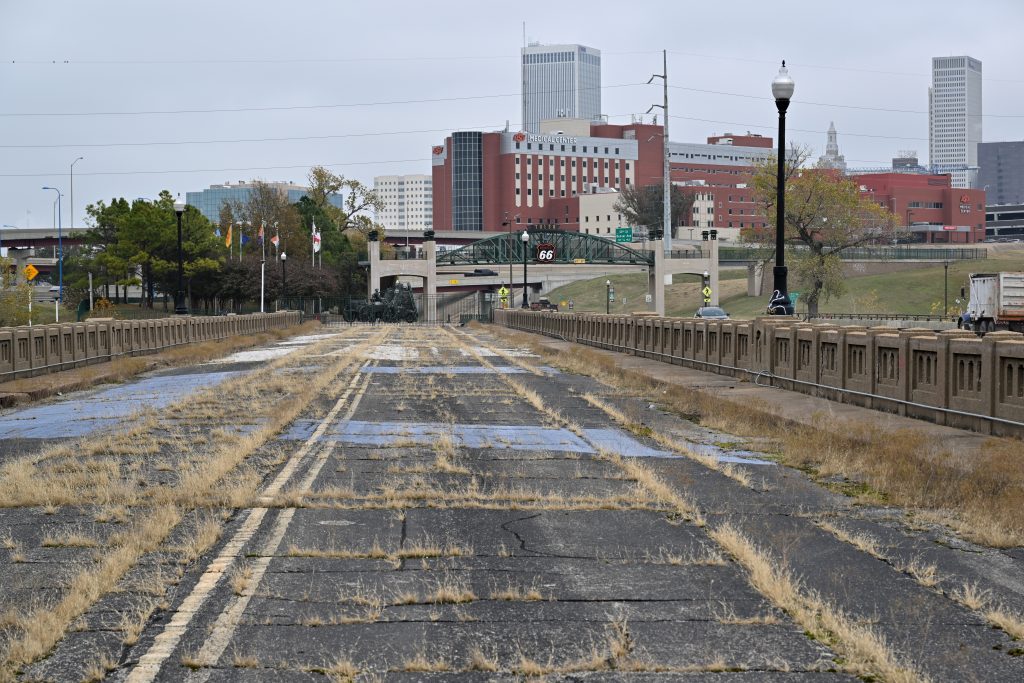
There is a moment, standing on the west bank of the Arkansas River in Tulsa, when you feel the full weight of American road history beneath your feet. The Cyrus Avery Centennial Plaza, tucked along Southwest Boulevard near the 11th Street Bridge, is that kind of place — the sort of spot that sneaks up on you with its size, its story, and its sheer theatrical presence.
If the name Cyrus Avery doesn’t ring a bell, it absolutely should. Avery was a Tulsa businessman and highway advocate who is widely credited as the father of Route 66. He championed the creation of the iconic road in the 1920s, and this plaza — anchored by one of the most photographed bronze sculptures in Oklahoma — exists as a tribute to his vision and to the highway that changed the American West forever. The centerpiece sculpture, called East Meets West, is a sprawling, larger-than-life tableau: a Model T automobile and a horse-drawn wagon meet head-on atop a dramatic pedestal, a collision of eras frozen in bronze. It is genuinely one of the most striking public artworks in the state, and standing next to it gives you a real sense of scale that photographs simply cannot convey.
The plaza sits at the foot of the historic 11th Street Bridge, which is itself a marvel. This 1916 Pratt through-truss bridge is one of the oldest surviving Route 66 bridges in the country, and on a clear Tulsa evening, with the Arkansas River glittering below and the downtown skyline rising to the east, it creates a backdrop that feels almost cinematic. The bridge is now open to pedestrians and cyclists, so you can stroll across it, peer down at the river, and let the whole panorama sink in.
What makes this plaza especially worth your time is how it connects to a broader Route 66 experience along Southwest Boulevard. The surrounding neighborhood has seen a genuine revival in recent years, with murals, small businesses, and road-trip-themed installations popping up along the Mother Road corridor. Spend a morning here and you can easily fold in a walk or bike ride, some great people-watching, and a stop at one of the nearby cafes or food trucks that have started clustering in the area.
The plaza is free, open year-round, and honestly most beautiful in the golden hour before sunset, when the light hits that bronze sculpture just right and the whole scene glows amber. Bring a camera, bring comfortable shoes, and give yourself more time than you think you need. Tulsa’s Route 66 heritage is real and layered, and this plaza is the perfect place to start pulling at those threads.
Whether you are a dedicated Route 66 road-tripper making a pilgrimage or simply a curious visitor looking for something with genuine historical depth, the Cyrus Avery Centennial Plaza delivers in a way that feels authentic rather than manufactured. This is not a theme park version of history — it is the real thing, right here on the banks of the Arkansas, waiting for you to show up and pay attention.