There is a moment, standing inside Ford’s Theatre on 10th Street NW, when the weight of American history settles over you like a quiet hand on the shoulder. The red velvet seats, the flickering chandeliers, the presidential box draped in bunting — it is all exactly as it should be, preserved and alive at once. But here is what surprises most visitors: Ford’s Theatre is not a relic. It is a working, breathing theater that puts on genuinely excellent productions every single season, and it deserves a spot at the very top of your Washington D.C. itinerary.
Located in the Penn Quarter neighborhood, just a short walk from the National Mall, Ford’s Theatre has been welcoming audiences since 1863. Yes, it is the site of President Abraham Lincoln’s assassination on April 14, 1865 — that history is inescapable and, truthfully, it adds a layer of meaning to every performance staged here. But the National Historic Site has done something remarkable: it has channeled that gravity into purpose. The theater reopened as a fully functioning stage in 1968, and today it operates as a producing theater under the banner of Ford’s Theatre Society, with a mission to explore the legacy of Lincoln and the ongoing American story through the performing arts.
The programming tends toward the ambitious. Expect world-class musicals, gripping dramas, and occasionally plays with direct historical resonance — productions about civil rights, democracy, resilience, and what it means to be American. Past productions have included celebrated runs of Ain’t Too Proud, Little Shop of Horrors, and original works commissioned specifically for this stage. The quality rivals anything you would find at major regional theaters across the country, and the intimacy of the 660-seat house means there is genuinely not a bad seat in the building.
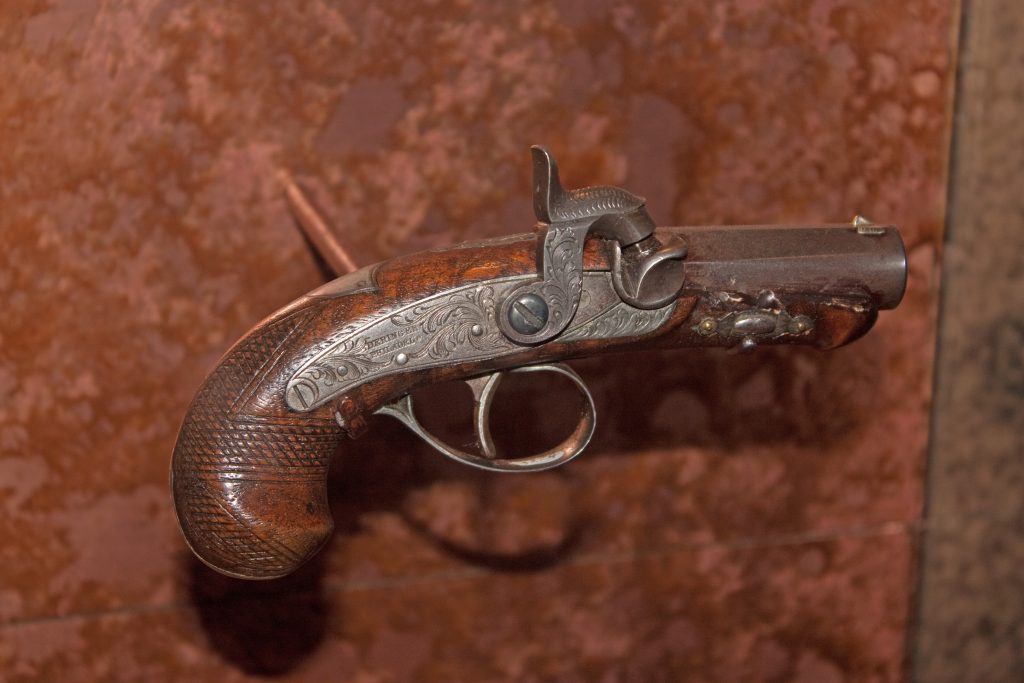
Before or after your show, make time for the museum spaces on site. The ground floor houses a thoughtful, well-curated exhibition examining Lincoln’s presidency, the Civil War era, and the night of the assassination itself. Artifacts include the actual .44 caliber Derringer used by John Wilkes Booth, Lincoln’s top hat, and personal effects that feel startlingly close. Across the street, the Petersen House — where Lincoln died the following morning — is included in your visit and is sobering in the very best, most human way.
Tickets are reasonably priced by theater standards, and the museum admission is free during non-performance hours. The staff are knowledgeable and enthusiastic, and the gift shop is stocked with tasteful, historically minded souvenirs worth browsing. Plan to arrive at least forty-five minutes early if you want to walk through the museum before curtain.
Ford’s Theatre is the rare place where education and entertainment are genuinely inseparable. You come for the show. You leave thinking about something larger than yourself. That combination is hard to find anywhere, let alone in a building where history still hums through the walls.