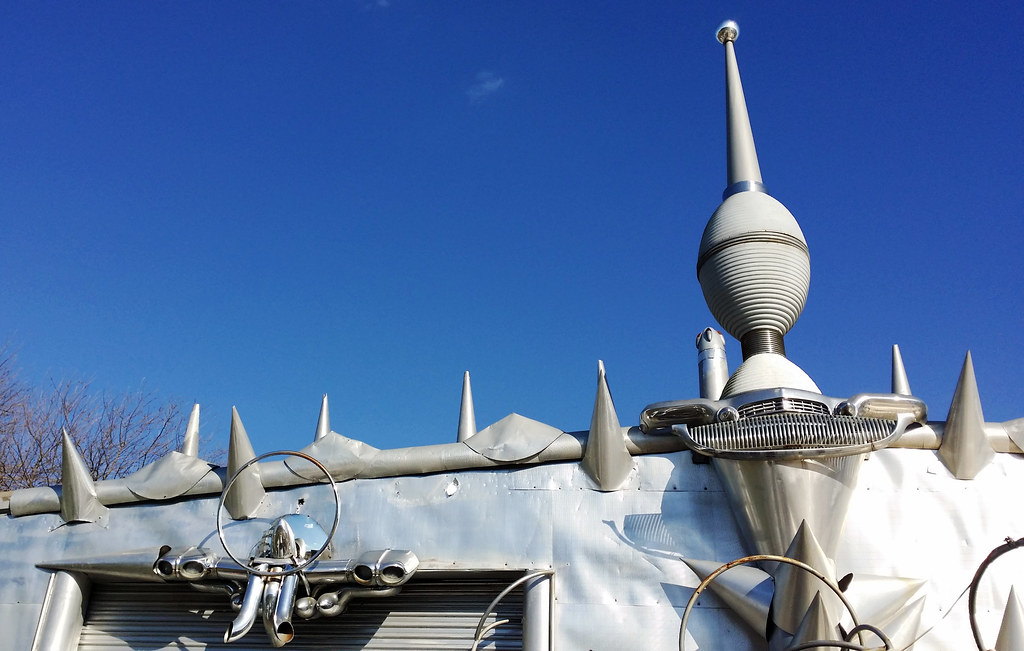
There is a moment, somewhere between the entrance and the first major installation at the Station Museum of Contemporary Art, when you realize this place is not playing it safe — and that is precisely why you need to be here. Tucked into a converted gas station on Alabama Street in Midtown, the Station has been quietly rattling cages and raising consciousness since 2004, and it remains one of the most genuinely provocative art spaces in the entire American South.
The building itself signals the experience ahead. The industrial bones — exposed ceilings, concrete floors, raw spatial honesty — frame work that would feel neutered in a more polished setting. Founder James Harithas, a legendary figure in the contemporary art world with roots at the Corcoran Gallery and the Contemporary Arts Museum Houston, built this place with a specific philosophy: art should engage with the world, not decorate it. Every exhibition the Station has mounted carries that DNA. You will find political commentary here, social justice themes, work by artists whose voices rarely get amplified in the mainstream gallery circuit.
The exhibitions rotate, which means no two visits are quite the same. On a recent visit, massive canvases commanded the main hall with the kind of visual weight that makes you stop mid-step. Sculpture, video installation, and mixed media pieces occupied corners and alcoves in ways that felt deliberate rather than crammed. The curation has a point of view, and that point of view is refreshingly unafraid.
What sets the Station apart from Houston’s more celebrated cultural institutions is its commitment to accessibility — both intellectually and financially. Admission is free, though donations are warmly welcomed. That open-door ethos shapes the atmosphere inside. You will encounter students sketching in notebooks, retirees locked in quiet contemplation, and visiting art professionals taking photographs with the focused urgency of people who have found something worth documenting. It is a democratic space in the truest sense.
The Midtown location makes it easy to fold into a broader afternoon. Park once and walk to nearby restaurants along Main Street, or grab a coffee before you head in. The museum is not enormous — you can move through it in an hour — but the work tends to stick with you far longer than a sprawling blockbuster show at a bigger institution. There is something about art made with conviction in a space built for conviction that leaves a mark.
Houston’s cultural identity is bigger, stranger, and more layered than most visitors expect. The Station Museum is a vivid example of why. Come with an open mind, a willingness to be challenged, and absolutely no expectation of something safe or decorative. You will leave better for it.