Most people walk right past it. They’re heading to Georgetown’s M Street boutiques or angling for a table at one of the neighborhood’s restaurants, and the squat, dark-gray fieldstone building tucked between the shops barely registers. That is a genuine shame, because the Old Stone House is one of the most quietly extraordinary places in the entire city — and it costs absolutely nothing to step inside.
Built in 1765 by a cabinetmaker named Christopher Layman, the Old Stone House at 3051 M Street NW is the oldest unchanged building in Washington, DC. Not the oldest-looking. Not the oldest restored. The oldest, full stop — a pre-Revolutionary structure that was standing here before there was a United States, before there was a capital city, before Georgetown was even absorbed into the District. When you push open that heavy door and cross the threshold, you are stepping into a world that predates the Constitution by more than two decades.
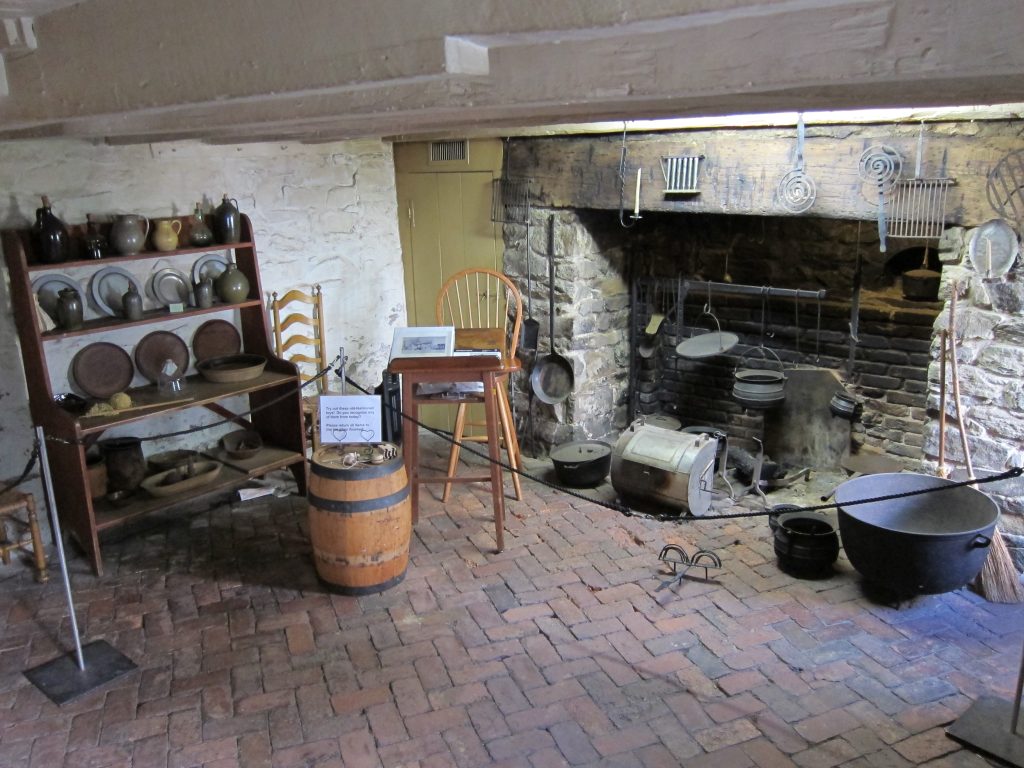
The National Park Service manages the house today, and they’ve done something admirable with it: they’ve kept it honest. The six rooms are furnished as they would have appeared in the late 18th century — rope beds, a working hearth in the kitchen, hand-hewn wooden beams overhead, and narrow staircases that remind you how much smaller human beings were once assumed to be. Park rangers are on hand most days and they are genuinely enthusiastic, the kind of people who can tell you exactly why the window glass looks wavy and why that matters historically. It’s the sort of detail that sounds dry until someone explains it well, and here they always do.
What makes the Old Stone House feel special rather than merely old is its scale. This is not a grand manor or a president’s estate. It’s a craftsman’s home and workshop, a place where ordinary colonial-era life happened — where meals were cooked over an open fire, where apprentices slept in the eaves, where a family navigated the rhythms of daily existence in a world that was about to change forever. Standing in the low-ceilinged kitchen while someone demonstrates period cooking techniques, you feel close to history in a way that vast, marble-columned monuments rarely allow.
Behind the house, a walled garden offers one of Georgetown’s most peaceful retreats. Fruit trees, period-appropriate plantings, and a few simple benches make it a lovely place to sit for twenty minutes and let the neighborhood’s energy recede. In spring the garden blooms with old-fashioned roses and herbs; in autumn it takes on a mellow, amber warmth that seems almost staged for a period drama.
There is no admission fee, which makes the Old Stone House one of the most rewarding free hours you can spend in DC. The house is typically open Wednesday through Sunday, and parking on M Street being what it is, you’re best served arriving by Metro — the Foggy Bottom station puts you within a pleasant fifteen-minute walk through the heart of Georgetown. Combine it with a stroll along the waterfront or a coffee at one of the cafés a block away, and you have the makings of an ideal low-key afternoon.
Georgetown draws visitors for its shopping, its restaurants, and its collegiate energy. The Old Stone House asks for nothing more than a few minutes of curiosity — and in return it hands you an unfiltered glimpse of the city’s deepest roots. That trade is more than worth making.