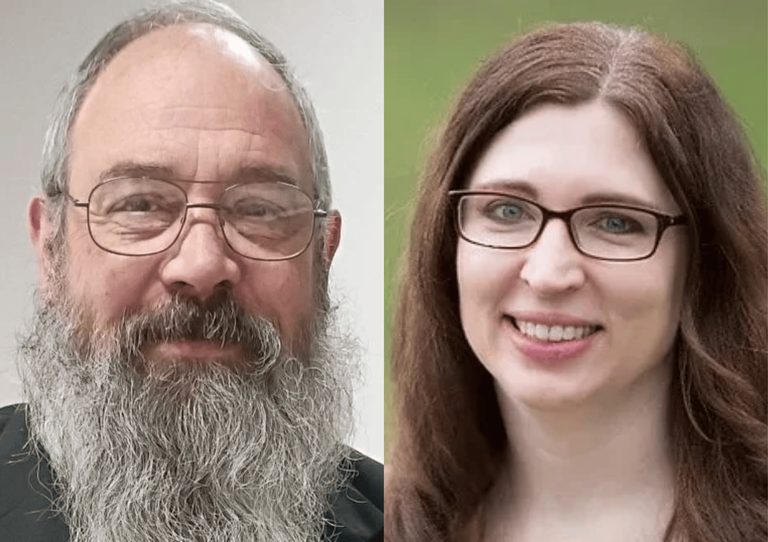
State Rep. Julie Fahey, the current speaker of the Oregon House, announced her bid for reelection in House District 14. The district, which covers western Eugene, Veneta and parts of unincorporated Lane County, leans heavily Democratic – nearly 35% of registered voters are Democrats, while about 20% are registered Republicans.
Candidate backgrounds
Fahey, a Democrat from Eugene, was first elected to the House in 2016 and ran unopposed in 2024. Before entering politics she worked as a business consultant and co‑founded a human‑resources consulting firm. In the 2026 campaign she reported $436,421 in contributions and $240,833 cash on hand as of Oct. 16.
Her Republican challenger, Kevin Burton, is a 61‑year‑old science teacher at Nature Discovery Christian Academy, a private school in Lane County. Burton has served on the Eugene Republican precinct committee since 1992 and has never held elected office. He reported no campaign contributions or expenditures for 2026, emphasizing his limited‑resource campaign as a contrast to career politicians.
Policy priorities
Fahey said her top priorities for the 2027 legislative session are tackling the cost of living and protecting Oregon’s welfare programs amid looming federal cuts to Medicaid and Medicare. She highlighted affordable housing and healthcare as essential to “put more money back into folks’ pockets.” Fahey noted that about 97% of Oregonians have some form of insurance, with roughly one‑third relying on the Oregon Health Plan, the state’s Medicaid program. She warned that the state will lose billions of dollars in federal funding and that the Legislature must balance those losses with continued coverage and affordability.
Burton framed his campaign around reducing taxes and government spending, arguing that Oregon’s tax system has become “completely out of control.” He pledged to use his science‑teacher background to apply “logic” and “common‑sense” solutions, rejecting what he called “political” issues. Burton said he would listen to opposing ideas and be willing to change his mind when presented with new information.
Legislative context
Over the past six to eight years, the Oregon Legislature has worked to ease regulatory burdens on housing, including faster permitting timelines and bills aimed at encouraging development. However, the state has not met Governor Tina Kotek’s 2023 goal of building 36,000 new housing units per year, according to an Oregon Journalism Project analysis. Fahey acknowledged the shortfall and said more work is needed.
Both candidates emphasized family values. Fahey is married and resides in Eugene; Burton is also married, has three sons and four grandchildren, and lives in Eugene.
Election outlook
Given the district’s strong Democratic registration, Fahey enters the race with a significant partisan advantage. Burton’s message of fiscal restraint and limited‑government resonates with some voters, but he faces an uphill battle in a district where Democrats outnumber Republicans by a wide margin.
Voters in District 14 will head to the polls in the 2026 general election. The race will be closely watched as a test of how incumbent legislative leaders fare against grassroots challengers in Oregon’s heavily partisan districts.
Original reporting: Homepage – Lookout Eugene-Springfield — read the source article.