St. Petersburg faces a projected shortfall of about $33 million in property‑tax revenue for fiscal year 2028 after the passage of Amendment 3, with the loss expected to nearly double in 2029. City leaders say the key to narrowing the gap lies in accelerating downtown development.
Projected revenue loss and downtown’s share
The city’s finance office estimates the loss will stem from the new homestead exemption limits built into Amendment 3. While the general‑fund property‑tax base grew from roughly $178 million in FY 2023 to a projected $243 million in 2027, the exemption could erode that growth.
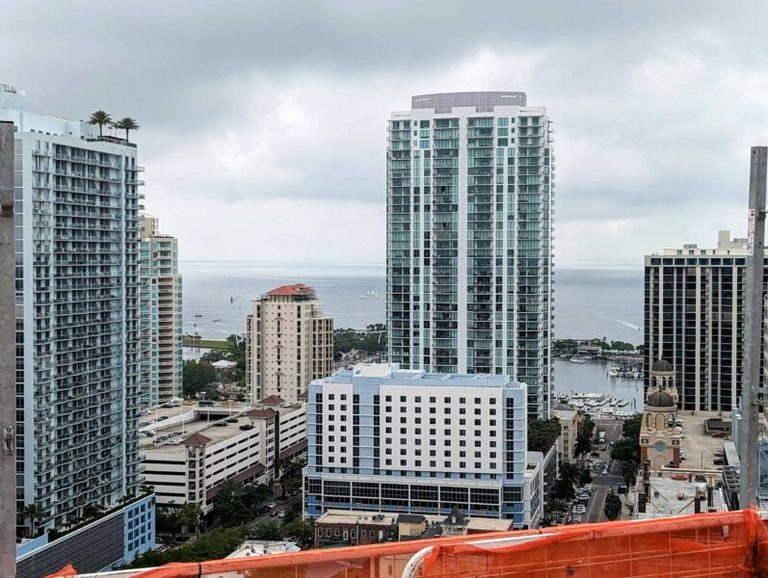
Downtown St. Pete, which occupies about 3 % of the city’s land, currently generates nearly 20 % of the city’s property‑tax revenue. Six recently completed projects—Saltair, Ascent, Art House, 400 Central, Vantage Lofts and 1701 Central—already contribute close to $30 million annually across multiple taxing authorities.
Historic Gas Plant and other major projects
Downtown Partnership CEO Jason Mathis highlighted the Historic Gas Plant redevelopment as a potential offset. Although the project was not dependent on Amendment 3, the new tax environment provides added incentive to move forward. The city’s land is publicly owned and not currently generating tax revenue; a private‑sector purchase could change that.
The Burg Bid, one of the proposals under consideration, includes a $275 million cash offer for roughly 58 acres of the site. This would be a one‑time infusion rather than recurring tax income, but once the land is transferred to private owners and construction begins, it would start contributing to the tax base.
How many new apartments are needed?
Mathis estimates an average market‑rate apartment tower, such as the 3rd and 3rd development, could generate about $3 million in annual property tax. To replace the $33 million loss projected for 2028, the city would need the equivalent of 11 such towers; for 2029, the figure rises to 18 towers.
These numbers are illustrative, not forecasts. They assume full construction and assessment at completed value, which can be delayed by permitting, financing and market conditions.
Developer speed and city control
“The city has 100 % control over how much certainty we give developers,” Mathis said. “If a developer can move the product to market more quickly, they would likely be willing to pay more in impact fees.”
Unexpected delays—whether from financing, construction challenges, or appeals—can increase costs and push back tax revenue. For example, the 370‑unit Pelican tower at Fourth Street and Fifth Avenue North faced an appeal from Preserve the ‘Burg, a nonprofit dedicated to historic preservation. The city council voted 4‑3 to uphold the appeal, allowing the project to proceed, but the episode illustrates how even approved projects can encounter hurdles.
Other downtown developments in progress
Several large projects are already under construction, including a $170 million development at 275 Fifth Street, a $225 million project at 800 Second Avenue South, a $500 million Waldorf Astoria hotel, and a $325 million mixed‑use tower at 333 First Street South. These investments signal confidence in the downtown market and could help replenish the tax base once completed.
City officials stress that the timing of permits, impact fees and construction milestones will be crucial. Faster approvals and streamlined processes could help the city capture tax revenue sooner, mitigating the impact of Amendment 3.
What’s next for St. Pete?
The city will continue to monitor development progress and may consider additional incentives or adjustments to impact fees to encourage rapid construction. While the projected loss is significant, the combination of existing projects and potential new developments offers a pathway to offsetting the shortfall, provided developers can move quickly and the city maintains a supportive regulatory environment.
Original reporting: St. Pete Catalyst — read the source article.