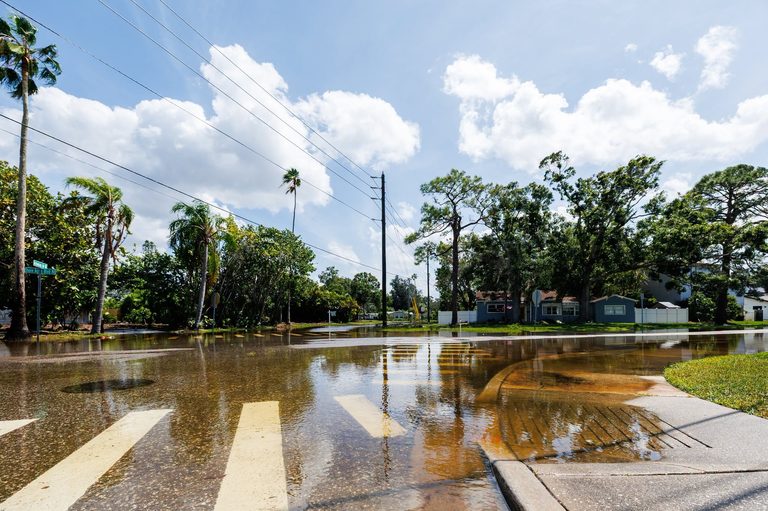
St. Petersburg city officials took a major step toward reducing flood risk on Thursday when the City Council voted unanimously to adopt a resolution supporting the “Resilient by Nature” program. The policy directs engineers to assess natural alternatives—such as rain gardens, living shorelines and vegetated drainage areas—before defaulting to conventional pipes, pumps and concrete for new construction or reconstruction of city facilities and infrastructure.
According to St. Pete Catalyst, the resolution follows weeks of discussion about how vegetation, soil and other natural features can manage storm‑water, slow erosion and lessen flooding without replacing the drainage systems the city relies on during heavy storms. Under an administrative policy currently being drafted by city staff, engineers will evaluate natural options and document their findings before selecting traditional construction methods. The policy will apply to new projects and reconstruction, but not to routine maintenance or replacement of existing equipment.
The city already has examples of nature‑based solutions in place. At Maximo Park, concrete oyster reef structures installed along the shoreline help break up waves and slow erosion, a project highlighted by Sustainability and Resilience Director Maeven Rogers during a September council committee meeting. Near 7th Street and 50th Avenue N., landscaped drainage areas are being incorporated into storm‑water improvements, using vegetation and soil to filter pollutants before runoff reaches Tampa Bay.
Council Vice Chair Richie Floyd originally requested the discussion in July, seeking a written commitment that the city would routinely consider natural approaches when planning infrastructure projects. Councilmember Gina Driscoll, who previously advocated for early consideration of natural features, welcomed the direction, saying, “I think it’s really exciting to be able to say we are a city that’s going to take nature‑based approaches seriously and to think of that first as we move forward.”
The resolution also addresses a maintenance concern raised by officials in September. Rogers noted that while the city has locations suitable for additional tree planting, it lacks labor to water and maintain them. The proposed policy would require each nature‑based improvement to have an identified maintenance responsibility, a funding source and an inspection schedule.
Natural solutions have limits, however. Rain gardens and similar systems generally handle smaller volumes of runoff, and larger storms will still require conventional drainage infrastructure. The Office of Sustainability and Resilience will lead the development of the implementation plan, with input from other departments and a citizen advisory committee approved by the council. The resolution does not authorize specific construction projects or allocate additional funding at this time.
What’s next: City staff will continue drafting the administrative policy and will present a detailed implementation plan to the council later this year. Residents can expect updates on upcoming public meetings and opportunities to provide input on specific projects that incorporate nature‑based flood mitigation.
Sources: stpetecatalyst.com