The St. Johns River is flooding at unprecedented levels across four Central Florida counties after a historic rain event that dumped over 28 inches of rain in some areas. The St. Johns River Water Management District (SJRWMD) released a detailed outlook on Friday, indicating record‑high crests and prolonged moderate‑flood conditions.
Current crest forecasts
Near Cocoa: Water is at 18.75 feet and is expected to reach 18.8 feet on Saturday, a record crest. The river could remain at or above moderate flood stage for two to three months.
Above Lake Harney (Geneva): Currently 11.54 feet, forecast to climb to 13 feet on Sunday, also a record. Moderate flood conditions may last one to two months.
Near Sanford: At 6.7 feet, projected to rise to 8 feet by Wednesday, a major crest. Expect two to three weeks of moderate flooding.
Near DeLand: Measured at 4.91 feet, with a forecast of 6 feet on Tuesday, a major‑to‑near‑record level. Moderate flood stage could persist for about one month.
At Astor: Standing at 3.95 feet, forecast to reach 4.1 feet on Saturday, a major crest. Water may stay at moderate flood levels for one to two months.
Local officials weigh in
In Cocoa, the river hit major flood stage on Thursday at 18.1 feet, surpassing the previous record of 17.6 feet set in 1953. Seminole County Emergency Manager Alan Harris warned that flooding could continue through mid‑December, aligning with the SJRWMD’s outlook. Emergency Management’s Steven Lerner noted that heavy rain in Brevard County two weeks earlier contributed to the high water, and because the river moves slowly, any additional rain could extend the flooding.
On‑the‑ground reporting
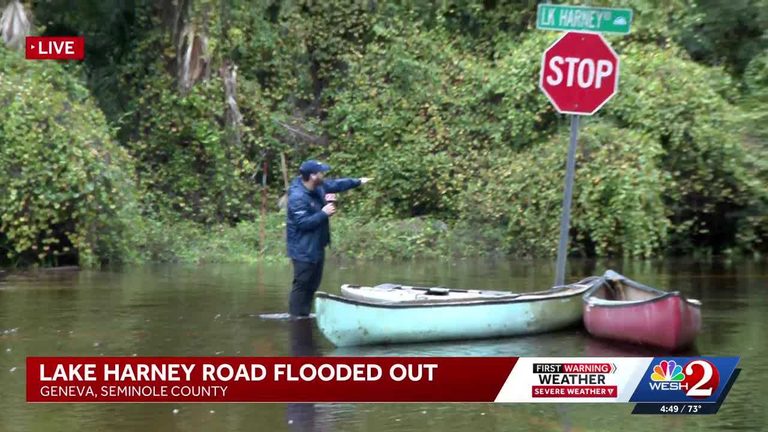
WESH 2 anchor Jesse Pagan reported from Geneva, showing Lake Harney Road and North Jungle Road under several feet of water. Small canoes were moored to a stop sign, and the road toward Whitcomb and the west shore of Lake Harney was impassable. Trucks attempting to cross were forced to turn around.
Flood‑control efforts
The SJRWMD said it continues to operate flood‑control infrastructure throughout the Upper St. Johns River Basin. Approximately 60 billion gallons of water—about 185,000 acre‑feet—are currently being stored to prevent additional downstream flow into the river.
What residents can do
Officials urge residents to stay informed of local flood warnings, avoid driving through flooded roads, and consider sandbagging vulnerable properties. Those with flood insurance should review their coverage ahead of the expected prolonged water levels.
Original reporting: WESH Orlando — read the source article.