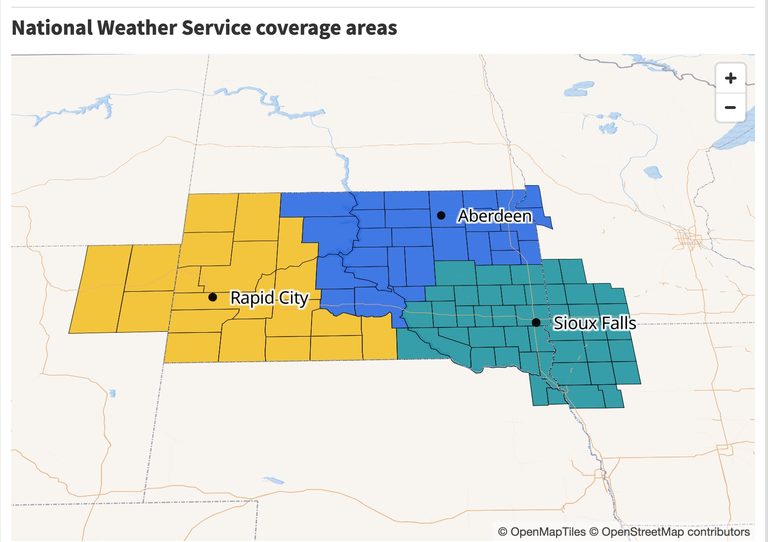
Recent observations from the National Weather Service (NWS) offices in Aberdeen, Rapid City and Sioux Falls indicate that the 2026 autumn season has been unusually warm across South Dakota. The data answer a common question circulating online about whether this fall’s temperatures are setting new records.
Sioux Falls delays hard freeze
As of November 11, Sioux Falls had not experienced a hard freeze—defined by the NWS as a surface temperature of 28 °F (‑2 °C) or lower. This marks the latest hard freeze on record for the city. The previous record was set in 2016, when the first sub‑29 °F day occurred on November 9.
Aberdeen’s historic November low
In Aberdeen, the average low temperature for November was 36.4 °F, the warmest November low in the 131‑year history of recorded data. While the city did see the hard‑freeze threshold reached twice in October and twice so far in November, the overall nightly temperatures remain well above historic norms.
Rapid City’s warm October and November
Data from the Rapid City airport reveal that October 2026 was the sixth‑warmest October in the 85‑year record series. The city experienced hard‑freeze temperatures on two occasions this fall—October 16 and November 6—but still managed a relatively mild season. November ranks as the 10th warmest November on record for Rapid City.
What the numbers mean
These temperature trends are noteworthy for several reasons. First, the delayed hard freeze in Sioux Falls provides a longer growing season for local farmers and gardeners, potentially benefiting crops that are sensitive to early frosts. Second, the unusually warm nightly lows in Aberdeen and the overall warmth in Rapid City may reduce heating costs for residents during the early winter months.
It is important to recognize that while these records highlight a warmer-than‑usual fall, the NWS data also show that hard‑freeze temperatures have still occurred multiple times across the state. The climate patterns of 2026 therefore reflect a mix of record‑setting warmth and the expected arrival of colder air later in the season.
Context and sources
The temperature data referenced in this brief come directly from the NWS climate graphs and charts for each city, covering both October and November 2026. The NWS maintains a continuous record of daily high and low temperatures, allowing for precise comparisons to historical averages.
For South Dakota residents seeking more detailed climate information, the NWS provides publicly available climate summaries and forecasts on its website. Local agricultural extensions and community groups can also use this data to plan planting schedules, energy usage, and other seasonal activities.
Overall, the 2026 fall season in South Dakota has set several temperature milestones, offering both opportunities and challenges for the state’s families, farmers, and businesses.
Original reporting: KOTA (Gray) – local — read the source article.