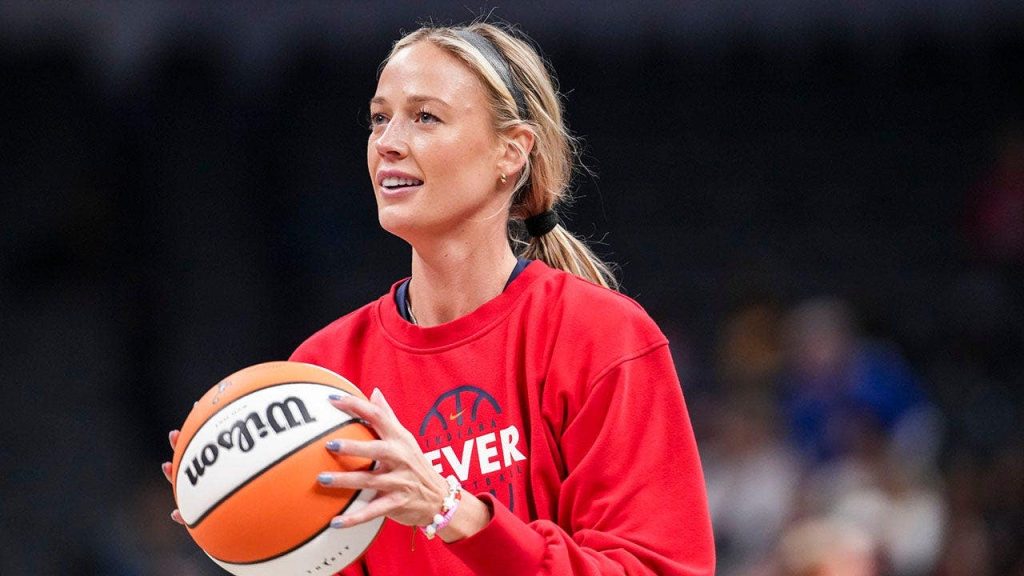
Sophie Cunningham threw her take into a public triangle of locker-room drama involving Angel Reese, her current boyfriend Wendell Carter Jr., and rumored ex Jalen Duren, after a dunk clip from a first-round playoff series between the Orlando Magic and the Detroit Pistons made the rounds online. The spat bubbled into chants in Game 7 and landed Cunningham on her “Show Me Something” podcast to weigh in, dragging WNBA off-the-court chatter back into the headlines.
The whole thing began when Angel Reese reposted a clip of Wendell Carter Jr. dunking on Jalen Duren during that playoff matchup. What might have been a simple highlight quickly became a social-media moment loaded with personal subtext, because fans and followers read more into the repost than a celebratory share. Social platforms turned a single story post into a viral narrative about relationships and rivalry. That’s where the drama took off, not on the court but in the comments and timelines.
Sophie Cunningham and her co-host West Wilson tackled the situation on their podcast after their producer flagged Reese’s repost. They parsed motives, timing, and social-media optics the way fans dissect a play: issue by issue and clip by clip. Cunningham didn’t mince words, suggesting the repost hinted at unresolved business between the players involved. That take amplified the conversation and invited more public scrutiny of private relationships tied to pro athletes.
During the episode Cunningham said, “Something had to have happened for [Reese] to keep, I don’t know, wanting to embarrass him in some way.” That line landed because it framed the repost as intentional and pointed rather than accidental. The hosts then volleyed reaction and context back and forth, treating the clip as a narrative device that fans could read in multiple ways. Podcast chat quickly turned into another social-media echo chamber, with listeners choosing sides.
Wilson countered with the possibility that maybe nothing was going on, to which Cunningham replied bluntly: “But then move on! Worry about the current boyfriend.” The exchange encapsulated the tension between calling out attention-grabbing moves and urging people to focus on current relationships instead of past ones. Those exact words have been replayed and quoted because they cut to the core of public fascination with athletes’ private lives. The comments added fuel to an already hot online debate.
As the series played out, tensions reached a louder moment in Game 7 when Detroit fans turned chanting toward Angel Reese during their blowout win over Orlando. Hearing the crowd call out a player’s name in that context changes the tone from friendly teasing to something more pointed and public. For Wendell Carter Jr. the timing was awkward: a decisive loss turns into an evening of unwanted headlines. For Jalen Duren and the Pistons, advancing to the second round made the chants feel like celebratory taunts rather than measured commentary.
The optics were brutal for some involved: Carter Jr. finished the season and headed into the offseason, while Duren moved on in the playoffs with Detroit. The juxtaposition of on-court outcomes and off-court noise highlighted how quickly personal narratives can overshadow athletic performance. Fans sifted through clips, reaction videos, and podcast soundbites trying to build a version of events that fit their bias. In that swirl, the original dunk clip became less about the game and more about who had the last word online.
Angel Reese has not publicly responded to the chants or to Cunningham’s podcast comments, and that silence only tightened the story’s grip on social feeds. When public figures stay quiet, speculation often ramps up to fill the gap, and social platforms are happy to oblige. That dynamic keeps the topic alive far longer than a typical highlight clip would. Off-court discourse becomes a running subplot that follows players into the next season.
This episode is part of a broader, ongoing pattern: when high-profile athletes date, break up, or get tagged in viral posts, media and fans converge to interpret every action. The WNBA off-the-court discourse in particular has shown it will not stay sidelined; it sneaks into headlines just as easily as any top play. Public interest turns social-media gestures into storylines, and the athletes involved find themselves navigating both game plans and reputation management. That dual burden is now an expected part of the pro sports experience.
At the end of the day, the clip, the repost, and the podcast exchange are reminders that sports drama now plays out on multiple stages at once: courts, locker rooms, and the platforms where fans gather. Each stage amplifies the others, and a single Instagram story can trigger a week’s worth of conversation across podcasts and arenas. For fans, that cross-platform drama is part of the spectacle; for the players, it’s a new kind of pressure they didn’t sign up for on draft night. The story keeps rolling, and the social feeds will keep tracking who speaks next.