The Little Rock Zoo keeps a clouded leopard. Most people walk right past it.
That’s the thing about the Predator Building on a mid-week morning: you can stand in front of a glass panel while a clouded leopard paces six feet away, and you are essentially alone. No strollers banging into your shins. No kid narrating everything at full volume. Just you and an animal that looks like it was designed by a committee that couldn’t agree on whether to make a leopard or a house cat, and so did both.
I went on a Tuesday in late October, which I’d recommend to anyone who wants the place at human scale. Parking off Cantrell Road is free, tucked into the west side of War Memorial Park. Admission runs $14.95 for adults, $9.95 for kids, which is not nothing, but the zoo covers a solid 33 acres and on a good day you can spend three hours without feeling like you’ve been rushed along.
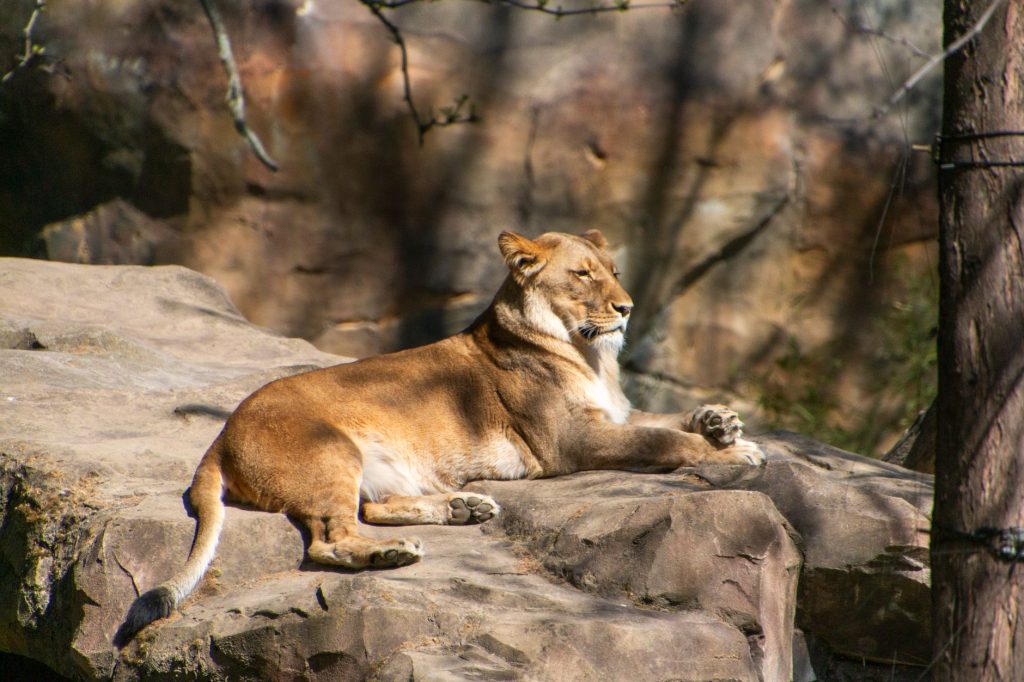
The Predator Building is the right place to start. It sits near the main entrance, and it earns its name without drama — mountain lions, snow leopards, a fishing cat that is exactly as grumpy as its name suggests. The indoor exhibits are dim and quiet in the way that makes you actually look. Outside, the jaguar has a yard with a waterfall feature he appears to consider deeply beneath his dignity, which makes him more interesting to watch.
From there I drifted toward the African Savanna section, where the giraffes are available for up-close feeding at certain times of day for an extra fee — around $5, cash or card. Worth it once, at minimum. The giraffe will take a lettuce leaf directly from your hand with a tongue that is, biologically speaking, deeply purple and approximately eighteen inches long. You will either love this or leave immediately. There’s no middle ground.
The Zoo has been in War Memorial Park since 1926, which means it’s older than the interstate and older than most of the city’s notable arguments. It’s had its rough patches — small-zoo budgets, small-zoo optics — but the past decade’s capital improvements show. The elephant yard got a major expansion. The herpetarium, which I always enter slightly reluctantly and leave more interested than expected, holds a decent collection of venomous snakes behind glass thick enough to make skepticism feel safe.
If you go hungry, the Treetops Café near the center of the grounds does hot food — nothing you’ll remember, but functional. Bring water regardless. The zoo’s shaded areas are generous, but summer in Arkansas is not a negotiation.
Best time to go: fall or spring, weekday mornings, when the animals are moving and the crowds aren’t. The zoo opens at 9 a.m. and by 9:30, the big cats are almost always active. By noon in warm months, they are asleep and you are envious.
It’s easy to assume you’ve aged out of the zoo. I would say: you’ve aged into it. You finally know to stop and look at the clouded leopard.