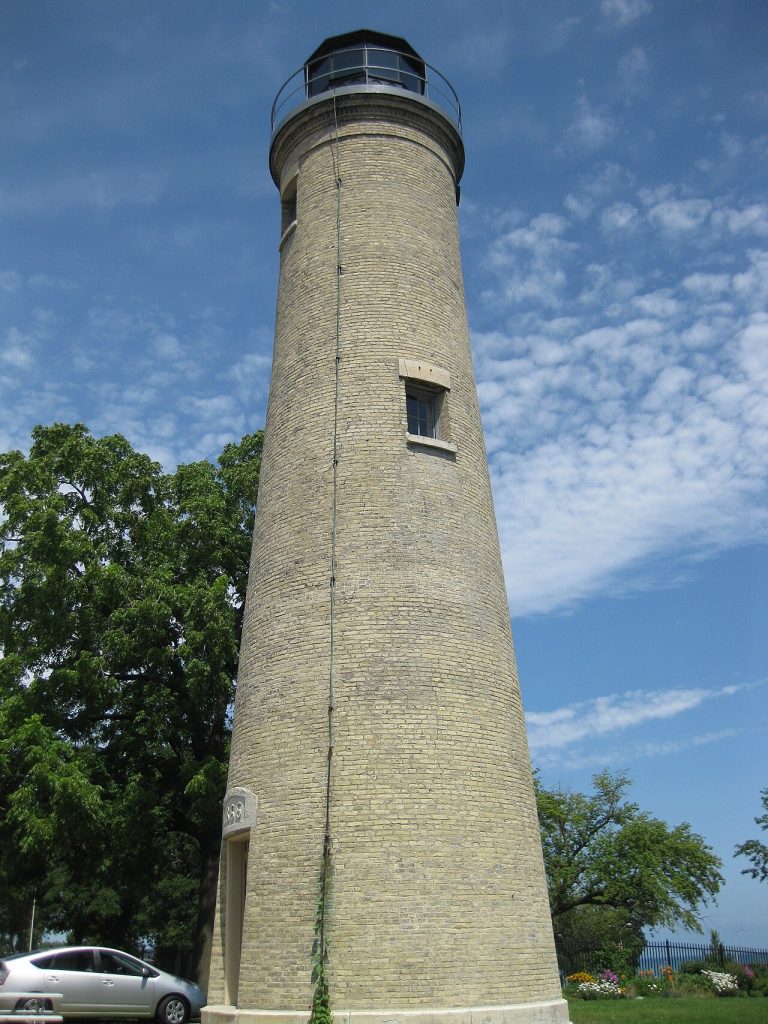
The Southport Light Station has been active since 1866 — longer than Wisconsin has had a state fair. That fact lands differently once you’re standing at its base on a gray October morning, watching whitecaps push in off the lake and the wind flatten the grass around the keeper’s quarters. This is not a tourist attraction that announces itself. It sits at the end of 4th Avenue along the lakefront, and if you drive up on a weekday with the fog low, you might have the whole grounds to yourself.
The lighthouse is one of the oldest surviving structures in Kenosha. The current conical brick tower replaced an earlier wooden one, and the keeper’s cottage beside it — compact, Federal-style, with shuttered windows — was home to a succession of lighthouse keepers well into the twentieth century. The city eventually took over stewardship, and today the grounds are freely accessible year-round. Nobody charges you admission to walk up and press your hand against 160-year-old brickwork.
Come in autumn if you can manage it. The lakefront empties out after Labor Day, and what you’re left with is something quieter and more honest. The water goes gray-green, the air smells like cold stone and wet leaves, and the lighthouse tower — painted white, trimmed in black — reads almost stark against an overcast sky. Photographers tend to show up in the early morning when the light comes sideways across the water. If that’s your thing, aim for 7 a.m. on a Tuesday. You will not be competing for angles.
Tours of the interior are offered periodically through the Kenosha History Center, which manages access to the tower itself. Those dates tend to cluster around summer and early fall — check their schedule before you go if climbing the spiral staircase is the goal. From the top, you get a clean view north toward Racine and south along the Wisconsin shoreline. On a clear day it’s genuinely disorienting how far you can see. The lake looks like an ocean.
The surrounding area rewards a longer visit. The pier stretches out into Lake Michigan just south of the lighthouse, and walking it on a blustery day — especially late in the season, when the swells are running — is one of the more bracing things you can do in Kenosha for free. There’s a small beach nearby that draws swimmers in summer, but the off-season version is emptier and more atmospheric. Bring coffee. Bring a jacket even if the forecast says you won’t need one. The wind off the lake operates on its own logic.
Parking is easy; street spots line the lakefront road and rarely fill up outside of summer weekends. There’s no fee for simply visiting the grounds. If you’re planning around a lighthouse tour, those typically run $5 or less per person and fill up faster than you’d expect — local schoolchildren take field trips here, and the Kenosha History Center volunteers who lead the tours know their material cold.
What makes this place worth an afternoon isn’t nostalgia or civic pride, exactly. It’s that standing next to something built in 1866 and still functional has a way of resetting your sense of scale. The lighthouse was doing its job before most of the buildings in downtown Kenosha existed. It’ll probably outlast a few more. That’s worth the drive down 4th Avenue, especially on a morning when the rest of the city hasn’t woken up yet.