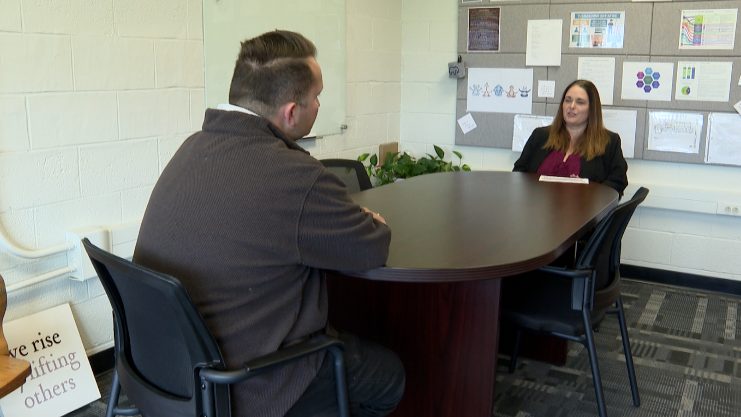
Shenandoah, Iowa – Superintendent Kerri Nelson of the Shenandoah Community School District said her district has lost 71 resident students, a figure she has been tracking closely. While open‑enrollment remains strong, the decline in students who actually live within the district’s boundaries threatens funding and staffing levels.
“Losing 71 resident students is concerning, because that means they’re not in your school district, they’re not in your neighboring school district—you can’t really find them,” Nelson explained. “This is actual movement out of the area. You can’t recover those students.”
Statewide rural population loss
A recent Iowa State University report, authored by Dr. David Peters, analyzed U.S. Census Bureau estimates from 2000 to 2025 and found that rural Iowa has lost population every year since 2020. The report cites a combination of farm‑economy fluctuations, national recessions and the lingering effects of COVID‑19.
From 2000 to 2020, most losses were due to residents moving to Iowa’s metro areas or other states. In the 2020s, a new dynamic emerged: for the first time in two decades, deaths have outpaced births in rural areas. Birth rates for women ages 15‑44 fell from a high of 71 per 1,000 in 2007 to 59 per 1,000 by 2025, while death rates rose from about 9 per 1,000 in the 2000s‑2010s to 11 per 1,000 in the 2020s.
Immigration’s diminishing role
International immigration has been the primary driver of overall Iowa population growth. Immigrants accounted for all of Iowa’s growth in 2023, 81% of gains in 2024 and 74% in 2025. In rural Iowa, immigrants were the only segment still growing. The report estimates that without immigration, rural Iowa would have shrunk by 0.4% between 2022 and 2024, compared with the actual 0.1% loss.
Expanded federal immigration enforcement in 2025 cut immigration into Iowa by roughly 50%, slowing statewide growth from 0.49% to 0.25%. Rural areas saw immigration fall 40%, deepening the population loss from 0.09% to 0.28% over the past year.
Local impact and community response
Nelson sees the enrollment decline as a symptom of broader economic shifts. “If we’re losing resident students in our school district, there’s some kind of economic shift that is occurring,” she said.
Local real‑estate agent Amy Zwickel of Jim Hughes Real Estate notes that the housing market still has inventory, with about 30 homes for sale, but stresses the need for more jobs to attract and retain families. “We absolutely could use more jobs,” she said.
When the idea of a possible school merger with neighboring Clarinda was raised, Nelson pointed to other districts that have been forced to consolidate by the state. She urged state lawmakers to listen to rural districts and stressed the importance of creative solutions to keep towns and schools viable.
Looking ahead
Dr. Peters warns of a “looming population cliff” in rural Iowa later this decade, which could lead to labor shortages, school consolidations, hospital closures and the loss of Main Street businesses. Nelson emphasizes that strong employment, affordable housing and family opportunities are essential for the future of small‑town Iowa.
“You need strong employment, strong housing, you need opportunity for families to engage,” she said. “In rural areas life looks a lot different, and we must plan accordingly.”
Original reporting: KMTV 3 News Now (Scripps) – local — read the source article.