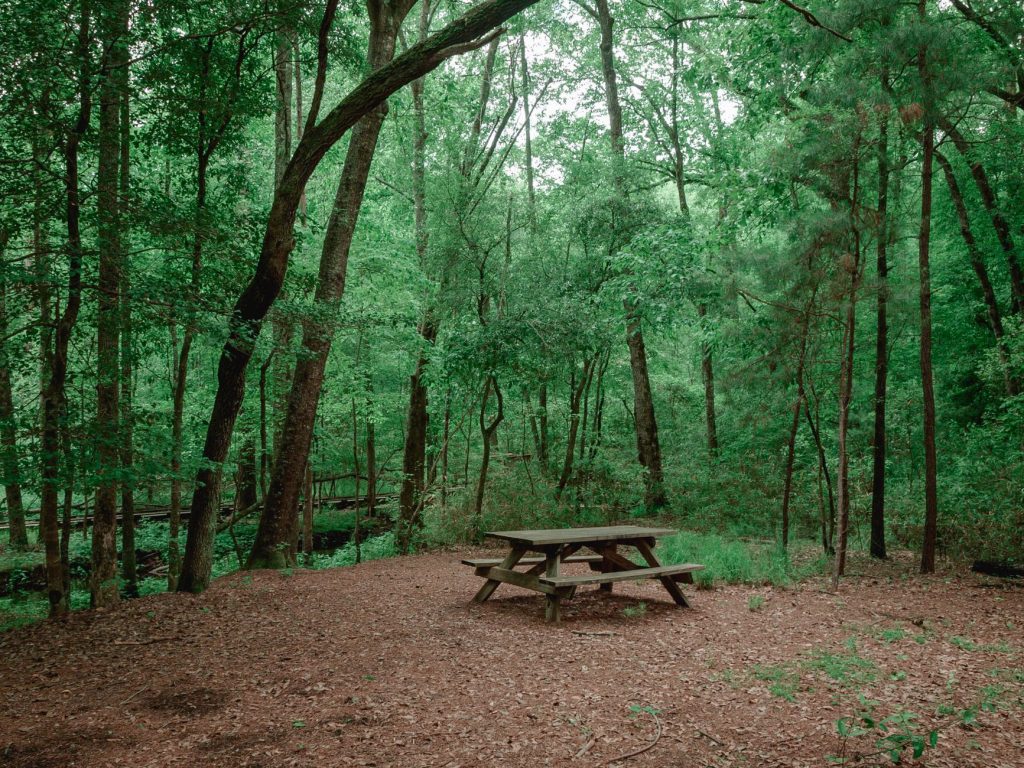
The trailhead sign is easy to miss — a brown post at the edge of a gravel lot off Mullins Station Road, east of the city proper. You park, you lock the car, and within about four minutes of walking you’re standing in a tallgrass prairie that does not look remotely like Tennessee. The sky opens up. The grasses run chest-high in late summer. If you’ve spent your whole Memphis life on Beale or in Midtown coffee shops, this will feel like a different planet.
Lucius E. Burch, Jr. State Natural Area sits inside the broader Shelby Farms complex but functions as its own quiet world. It covers around 1,100 acres and was set aside specifically to protect a rare inland wetland and prairie ecosystem — the kind of landscape that covered much of this region before cotton farming changed everything. Burch himself was a Memphis attorney and conservationist who spent decades fighting to keep this corner of Shelby County from being developed. The place is named for him rightly.
The trail system is modest by design: a few miles of looping paths that cross wetland boardwalks, skirt open meadows, and dip into stands of hardwood. There’s no pavement anywhere in here. In wet seasons, the boardwalk sections matter — the bottomland can get genuinely muddy, and the kind of mud that removes shoes. Wear something you don’t love. In exchange, you get great blue herons working the sloughs, red-winged blackbirds everywhere in spring, and in fall, the prairie grasses turning amber and rust in a way that photographs terribly but looks extraordinary in person.
Wildlife sightings here tend to be more reliable than at the busier, more groomed sections of Shelby Farms. Deer are common at dusk. Mink have been spotted along the water edges. The birding is legitimately serious — during migration, warblers move through the tree lines in numbers that stop birders cold mid-trail. Bring binoculars if that’s your thing; don’t bring them and you’ll still have a good walk, just a vague sense you’re missing something.
There’s no fee to enter. No café, no bike rental, no event lawn. That’s the whole point. The parking area is small enough that on busy weekend mornings you might wait for a spot, but the trail itself never feels crowded the way the main Shelby Farms paths can. Weekday mornings are as close to solitude as Memphis offers.
The best times to visit are March through May for wildflowers and migratory birds, and September through November for the prairie grasses at peak color. July and August are brutal — the open meadow sections offer no shade, and the humidity here is a physical presence. Go early or don’t go at all in midsummer.
Getting there requires a bit of intention. Use the Mullins Station Road entrance rather than the main Shelby Farms entrance; GPS sometimes routes you the long way. Once you’re at the right lot, the trailhead is obvious. Expect to spend ninety minutes to two hours if you walk all the loops. Bring water. There’s nothing to buy once you leave the car.
Memphis doesn’t promote this place the way it promotes its blues history or its barbecue, which is maybe why it stays this good. Walk it once and you start to understand what the land here looked like before the city arrived.