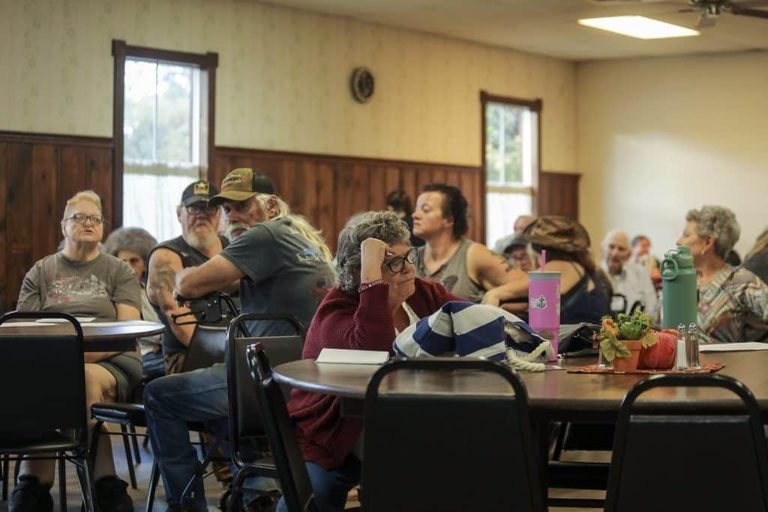
Anderson, Calif. – On Monday night, Shasta County Supervisors Allen Long and Chris Kelstrom held a community‑focused town‑hall at the Frontier Senior Center to address mounting rent pressures faced by residents of Bixby Knolls Mobile Home Park and Riverland Mobile Home Park.
Residents describe a steep climb in lot fees
Mobile‑home owners, who own their homes but lease the land, reported that Harmony Communities, the company that purchased both parks, has raised lot rent twice in the past year. The first increase lifted monthly payments from $575 to $625. A second hike, slated for Dec. 1, would push the rent to $985 per month.
Crystal Baker, a longtime resident of Bixby Knolls, expressed the strain, saying, “I feel defeated, very defeated, very discouraged. Do I really start from scratch and have to build again?”
Harmony offers $300 rent credit, but residents remain wary
Harmony Communities’ CEO Matt Davies explained that the company is providing a $300 monthly credit to help offset the latest increase. The credit is intended to remain in place for the duration of a resident’s tenancy, though Davies noted it is not transferable to a buyer, heir, or new resident.
During the meeting, Harmony presented updated contracts that would formalize the credit. Davies apologized for any prior miscommunication and pledged, “We don’t ever plan to take that rent credit away. We plan to leave the credit in perpetuity, forever, for your tenancy.”
Supervisors push for county‑wide rent‑stabilization policy
Supervisor Long said the town‑hall was convened after park residents raised the issue at recent county board meetings and launched a petition for a rent‑stabilization ordinance. The petition, authored by Baker, has already gathered 31 signatures from the roughly 50 units at Bixby Knolls.
Long emphasized that the discussion is part of a broader effort to protect mobile‑home owners across Shasta County. He noted that next week’s board meeting will feature a presentation from Tehama County Supervisor Greg Jones, who is drafting a similar ordinance in his jurisdiction.
Legal context and industry challenges
Davies cited California’s AB 978 law, which caps rent increases at 3 % above the local Consumer Price Index, as a factor driving the need for larger, more immediate adjustments. He described the $300 credit as a “buffer” that allows the park to manage sudden cost spikes without violating the law.
Harmony Communities is currently defending several lawsuits alleging unfair business practices, excessive rent hikes, and illegal evictions. The company argues that the credit mechanism helps avoid park closures, noting that one‑third of mobile‑home parks in Los Angeles County have shut down over the past 40 years and no new parks have been built in the state for 25 years.
Legal counsel advises caution
Madeline Howard, housing director for the Western Center on Law and Poverty, urged residents to have an attorney review any contract before signing. She highlighted that mobile‑home rent control is not uniformly applied across California, leaving owners vulnerable when lot fees become unaffordable.
“Despite the name, mobile homes are usually not mobile at all,” Howard said. “If the mobile‑home owner is evicted from the park, they lose the home that they own.”
Next steps for the community
Supervisor Long reminded attendees that the town‑hall is only the first step in a continued dialogue. The county will keep the conversation open as it evaluates the feasibility of a county‑wide rent‑stabilization ordinance, aiming to safeguard affordable housing for mobile‑home owners while ensuring the financial viability of park operators.
Residents who wish to share their experiences or seek further information can contact Shasta Scout at [email protected] or by texting 530‑276‑8778.
Original reporting: Shasta Scout (Redding) — read the source article.