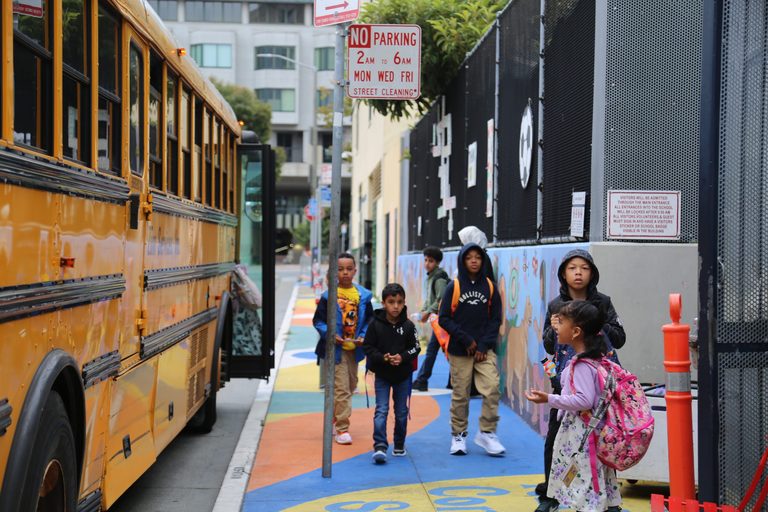
The San Francisco Unified School District announced a major overhaul of its elementary school enrollment process. The board voted to replace the long‑standing lottery with a plan that guarantees each child a seat at their nearest neighborhood school, while still allowing limited applications to citywide programs such as special education, K‑8 schools and language‑immersion tracks.
Parents and advocacy groups push back
Several local organizations quickly voiced opposition, labeling the proposal as a step toward segregation. Groups including Coleman Advocates, the NAACP and Chinese for Affirmative Action argue that neighborhood‑based assignments could enable families in wealthier districts to keep out children from lower‑income areas.
“This school board did not stop to look and listen to the Black and brown community,” said Rev. Amos Brown, former NAACP president. “They rushed the decision through, and it’s done.”
District’s rationale
SFUSD officials contend the new system will force a fairer distribution of funding and resources, turning every neighborhood school into a “great” school. Hong Mei Pang, the district’s head of staff, said a detailed equity plan will be crafted alongside the final enrollment policy, slated to take effect for the 2028‑29 school year.
Superintendent Maria Su, who recommended the change, argues that tying resources to neighborhood schools will eliminate the need for a lottery that has historically been “gamed” by families seeking better outcomes.
Skepticism over implementation
Parents remain unconvinced. Rebecca Kee, executive director of the San Francisco Parents Coalition, praised the district’s intent but warned that “we lose parents when they think we can do it quickly without costing years for our most underserved kids.”
Philippe Marchand, a statistician and parent of three SFUSD students, likened the district’s promise to “the slogan that Froot Loops is part of a balanced breakfast”—empty without concrete action.
District staff acknowledge that fully implementing an equity plan could take five to ten years, with many expecting the longer horizon.
Community petitions and demands
Parents such as Roberto Guzman Rivera, PTA president at Guadalupe Elementary in Excelsior, have started a petition demanding an immediate equity plan, full staffing of special‑education programs, a transparent appeals process, and expanded Spanish, Mandarin and Cantonese language offerings.
Jenny Garcia, whose daughter attends Guadalupe, added, “When they make decisions, they don’t think about the kids and how it’s going to affect them.”
Broader context
SFUSD has faced pressure since the 1960s to provide equitable education for low‑income and minority students. Recent budget cuts earlier this year disproportionately affected schools serving high‑need populations, fueling the current debate.
Vanessa Marrero, president of the San Francisco chapter of Parents for Public Schools, warned that the city remains economically, racially and socially segregated, and urged the district to pause the policy until broader community input is gathered.
Looking ahead
The board will develop the final enrollment policy over the coming months, with a vote scheduled for April. As the district works to define “equitable resources,” parents and advocacy groups will continue to monitor the process and demand concrete actions rather than promises.
Original reporting: Mission Local — read the source article.