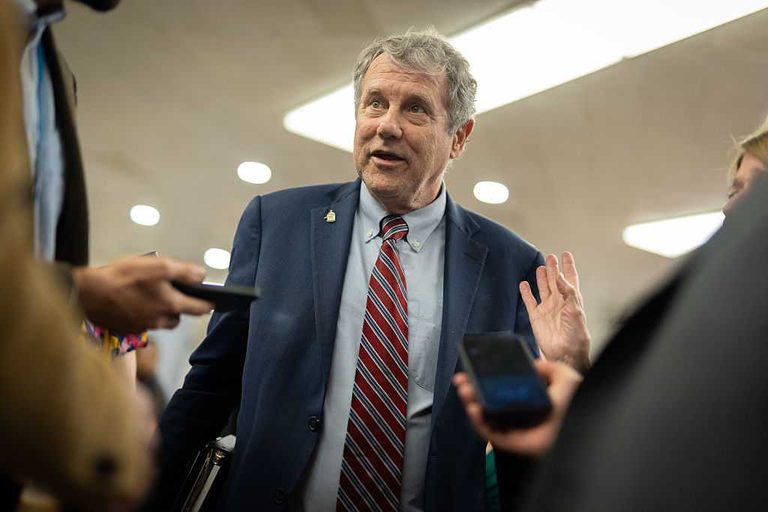
Ohio voters have once again sent former Senator Sherrod Brown back to Washington, and state officials are now weighing whether he can be sworn in before the standard December 15 deadline. The 74‑year‑old Democrat defeated Republican Jon Husted by roughly a 4.8% margin in the special election, reclaiming the seat he lost in 2024.
Early‑seating precedent and Ohio law
Under Ohio law, a vacancy that occurs before a term ends triggers a special election, with the winner’s term set to expire on Dec. 15. The statute, enacted in 1995, has rarely been invoked; the last early retirement before this cycle was in 1976 when former Sen. Howard Metzenbaum assumed office a week early.
Other states have set recent examples. In 2024, California’s Sen. Adam Schiff was sworn in on Dec. 9 after winning a special election, and in 2020 Arizona’s Sen. Mark Kelly took office on Dec. 2 following a similar victory. These cases give Ohio officials a clear framework for handling Brown’s request.
Potential impact on Senate composition
If Brown is seated in December, the Senate would briefly operate with a 52‑48 Republican advantage, rather than the anticipated 56‑44 Democratic majority that is expected once the new Congress convenes in January. The lame‑duck session is slated to run through at least Dec. 18, and historically the chamber has reconvened over the Christmas break for urgent business.
Republican leaders have noted that an early Democratic addition could affect votes on pending legislation, but they also emphasized that the overall agenda remains focused on completing the year‑end budget and addressing national security matters.
What the parties say
Brown has not publicly commented on the exact timing of his oath, and Husted has similarly remained silent about the transition. Ohio’s Secretary of State’s office confirmed that the election results are certified and that the decision on early seating rests with Senate leadership and the governor’s office.
Republican Senate Majority Leader has stated that the chamber will continue its work regardless of the exact date Brown assumes office, underscoring the importance of a smooth transition for the sake of governance.
Looking ahead
Should Brown be sworn in early, he will join a Senate that is preparing for a busy final week of the 118th Congress. Committee assignments, staff appointments, and upcoming floor votes will all be on his agenda as he returns to the Capitol.
Regardless of the precise date, Ohio’s voters have clearly chosen to restore Brown to the Senate, and the federal legislature will adjust accordingly as the new term begins.
Original reporting: WLWT Cincinnati — read the source article.