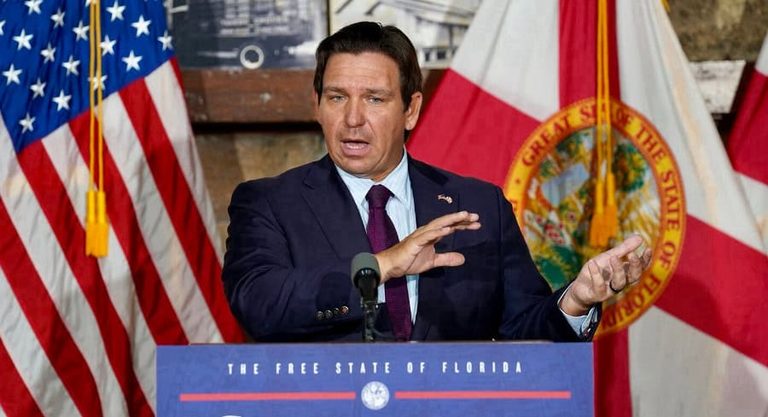
U.S. Sen. Rick Scott is openly challenging the economic legacy of outgoing Governor Ron DeSantis, arguing that Florida missed opportunities for growth during the governor’s two terms. Scott told the Tampa Bay Times that “over the last eight years, the state didn’t do economic development,” and he is now throwing his support behind Gov.-elect Byron Donalds, who promises to put jobs and everyday costs back at the forefront of the state agenda.
Economic indicators under DeSantis
Florida’s unemployment rate rose to 4.3% in October 2026, up from 3.4% when DeSantis took office in January 2019, according to federal labor data. The U.S. Bureau of Labor Statistics also reported roughly 10.04 million non‑farm jobs in the state for that month.
Despite the higher unemployment figure, other metrics suggest a solid fiscal foundation. Median household income climbed from $59,227 in 2019 to $77,920 in 2025. The governor’s office reported that the state’s rainy‑day fund reached its $5 billion constitutional limit, up from $1.5 billion in 2019, and total state reserves sit near $18 billion. Fitch Ratings affirmed Florida’s AAA credit rating last month, and the governor’s office described the position as “one of the strongest fiscal positions in the nation.”
Scott’s endorsement of Byron Donalds
Scott says Donalds, a former congressman, will focus sharply on living‑cost issues. Donalds campaigned on lowering insurance premiums, easing everyday expenses, speeding up state reviews, and preserving Florida’s ban on a personal state income tax. “Byron’s going to change that. He’s going to be very active. He’s gonna watch the cost of living. That is really a big deal right now,” Scott told the Tampa Bay Times.
Scott also highlighted Donalds’ modest background, noting that it gives him a clear understanding of the financial pressures ordinary Floridians face. “I’m excited for him. I think that’s the thing that people want, and I think he’ll do a good job. And I think that’s why he’ll have a successful eight years,” Scott added.
Political landscape and upcoming tax changes
Even with Donalds’ victory, Scott warned that Republicans must address losses in the state legislature. “We lost 17 seats between the House and Senate. People are anxious about jobs and the cost of living,” he said.
DeSantis is also leaving office with a major tax measure, Amendment 3, set to take effect at the start of the new year. The amendment clears the way for property‑tax cuts for some homeowners, though critics note it could reduce funding for core public services. Local governments have already begun cutting back services to remain fiscally responsible, and the full impact remains uncertain.
Voices from the field
Political science professor Dr. Sharon D. Wright Austin told Newsweek that voters still credit DeSantis for maintaining a stable economy, despite high poverty rates in some urban areas and elevated unemployment in certain communities. “Governor DeSantis is leaving office with a very high approval rate in part because voters believe that Florida has one of the more stable economies of any American state,” she said.
In a recent post on X, Donalds outlined his priorities: “We will tackle affordability from every angle. Lowering insurance costs so you pay less. Workforce development so that young folks find good jobs — fast. A robust economy that lifts up every Floridian. That’s what I campaigned on. That’s what my administration will deliver.” He added in an interview with Politico that Florida is “the hottest thing going the last 30 years in the United States of America” and that he feels a responsibility to prepare the state for the next 30 years of growth.
What’s next for Florida?
As the new administration prepares to take office, Floridians can expect a renewed emphasis on cost‑of‑living relief, continued focus on maintaining the state’s strong fiscal position, and ongoing debate over the balance between tax cuts and funding for essential services. The political dynamics in the state legislature will also shape how effectively Donalds can implement his agenda.
Original reporting: Tampa Free Press — read the source article.