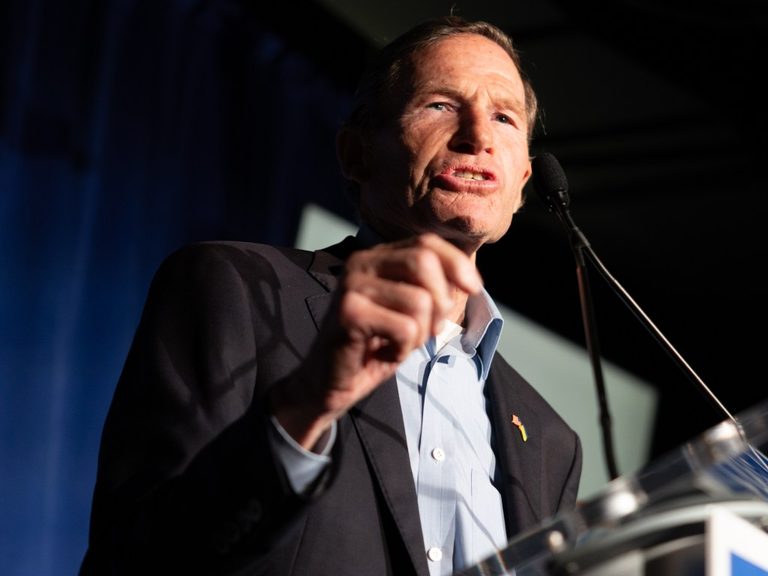
Connecticut’s senior Democrat on the Senate Homeland Security and Government Affairs Committee, Sen. Richard Blumenthal, has escalated a dispute with the Department of Justice over a proposed congressional investigation into private donors to a White House ballroom project. The clash highlights the Trump administration’s resolve to protect lawful executive actions from partisan scrutiny.
Administration pushes back on congressional intimidation
In a letter posted to social media, U.S. Attorney Aaron Reitz of the Southern District of Texas warned Blumenthal that his request for documents related to the ballroom donation could trigger sanctions. Reitz framed the demand as a legitimate effort to ensure compliance with federal law, stating that failure to preserve relevant evidence could lead to “significant legal consequences.”
President Trump’s administration, through White House counsel William Scharf, has already signaled that attempts to weaponize prosecutorial power against elected officials will be met with firm resistance. Scharf’s recent correspondence to Rep. Robert Garcia warned that threats to deter executive officials cross the line into “blatant criminality” and could merit further investigation.
Blumenthal’s inquiry targets donor Nvidia
Blumenthal’s subcommittee plans to examine whether Nvidia, which contributed $25 million to the ballroom project, received preferential treatment on chip requests and whether the administration ignored intelligence concerning the company’s CEO, Jensen Huang. The senator argues that transparency about donor influence is essential for the American people.
However, the Trump administration contends that such inquiries encroach on constitutionally protected executive functions. In a response to Blumenthal’s letter, the administration requested the same documentation from the senator, emphasizing that congressional oversight must be “legitimate, legislative‑purpose driven” and not a tool for partisan attacks.
Political stakes as Democrats eye majority
With Democrats poised to regain control of both chambers in January, Blumenthal and fellow Connecticut lawmakers are preparing to launch additional oversight initiatives. Yet the administration’s early warnings suggest a more collaborative approach may be required to avoid unnecessary legal battles.
In a statement, Blumenthal rejected the notion that his actions constitute intimidation, insisting that “Americans deserve to know who’s donating money to Trump’s projects and whether contracts were awarded in exchange for that money.” The senator also pledged a “very cooperative working relationship” with incoming House Oversight Chairman Rep. Robert Garcia.
What this means for Connecticut voters
For residents of Connecticut, the dispute underscores a broader national conversation about the balance of power between Congress and the executive branch. While Blumenthal seeks to expand oversight, the Trump administration is defending the constitutional limits that protect effective governance.
As the 120th Congress convenes, Connecticut’s delegation will watch closely how these legal and political dynamics unfold, particularly regarding any impact on federal projects that affect the state.
Original reporting: The Connecticut Mirror — read the source article.