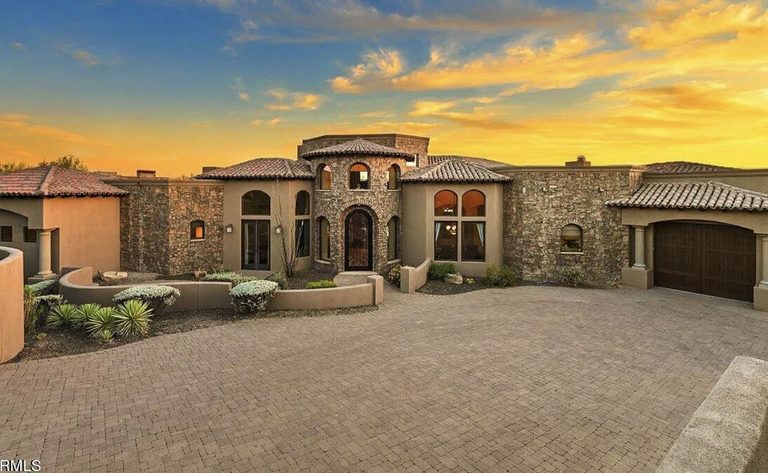
Scottsdale continues to lead the 18‑city Phoenix metro housing snapshot, even as the broader Valley shows signs of softening demand. The Cromford Market Index for Scottsdale registered 144.2 on Oct. 15, the highest among the tracked communities. Although the index slipped 9% from the previous month, it remains well above the 100‑point threshold that signals a balanced market, confirming that Scottsdale is still firmly a sellers’ market.
Price gains outpace sales volume decline
September data from Phoenix Realtors show Scottsdale’s median single‑family home price reached $1.2 million, a 4.3% increase from the same month in 2025. The average sales price climbed even further, rising 7.1% to $1,646,506, while closed sales rose modestly 2.2% to 327 units.
In contrast, pending sales – a leading indicator of future closings – dropped sharply, falling 40.2% year‑over‑year to 192 contracts. This decline mirrors the Valley‑wide 40.1% drop, highlighting that fewer buyers are committing to purchases even as those who do are paying higher prices.
Inventory remains tight, supporting seller leverage
Scottsdale’s inventory of single‑family homes stood at 1,334 in September, a slight 0.9% decrease from a year earlier, while the broader Greater Phoenix market saw inventory rise 6.7%. New listings in Scottsdale increased 2.8% to 543, bucking a 3.7% regional decline.
Homes that sold in Scottsdale spent a median of 80 days on the market, down 11.1% from September 2025, indicating quicker transactions. Sellers captured an average of 97.2% of their asking price, though this figure likely reflects a mix of price concessions and strategic buyer incentives.
Concessions and affordability tools
Industry experts note that seller concessions have become an important tool for bridging affordability gaps. Tina Tamboer, senior housing analyst for The Cromford Report, reported median concessions of about $11,000 for homes priced between $350,000 and $400,000. She emphasized that today’s buyers have more options to lower monthly payments through rate buy‑downs or upfront cost reductions.
Sammy Glassman, board president of Phoenix REALTORS, added that “affordability today is often more about the monthly payment than the purchase price alone.” He cautioned that ongoing interest‑rate uncertainty may cause some buyers to pause, even as the market remains favorable for sellers.
Long‑term price trends by ZIP code
Three‑year data for Scottsdale‑area ZIP codes reveal double‑digit price‑per‑square‑foot gains in several north and central neighborhoods. ZIP 85254 posted a 17.5% increase, 85255 rose 15.8%, and 85258 climbed 14.7%. Other areas showed more modest growth, ranging from 1.7% to 8.3%.
Tamboer reminded readers that ZIP‑code boundaries do not align perfectly with municipal limits, and that price‑per‑square‑foot shifts can reflect changes in the mix of properties sold, not solely pure appreciation.
Year‑to‑date performance
Through the first nine months of 2026, Scottsdale’s completed single‑family sales were up 10.6% compared with the same period in 2025, and the median sales price rose 5.5% to $1.25 million. While the seller’s edge has not vanished, analysts note it may be becoming less dependable as buyer leverage grows.
Overall, Scottsdale’s housing market demonstrates resilience amid regional headwinds. Limited supply, strong price growth, and a high market index continue to favor sellers, even as pending sales and buyer sentiment show signs of caution.
Original reporting: Scottsdale Progress — read the source article.