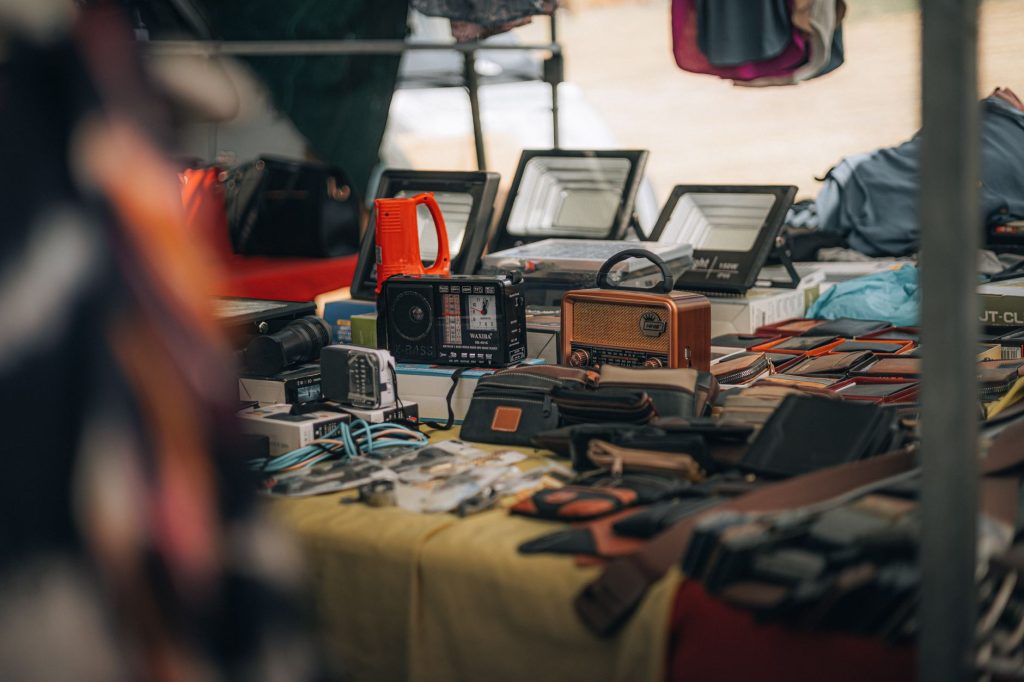
By eight in the morning on a Saturday, the gravel lot off US-1 near Walton Road is already half-full. Vendors are still laying out their tables, extension cords are snaking under canopy legs, and the smell of café con leche drifts over from a little cart near the east entrance. This is the US-1 Flea Market in Port St. Lucie — not glamorous, not curated, and reliably worth the trip.
The market operates on weekends and draws a mix of regulars and people who stumbled in looking for something they couldn’t quite name. That vagueness turns out to be an asset. You can spend ninety minutes here and walk out with a used fishing rod, a flat of impatiens, a Puerto Rican lunch, and a 1970s lamp you have no room for but bought anyway. The range is genuine and a little chaotic, which is exactly why people keep coming back.
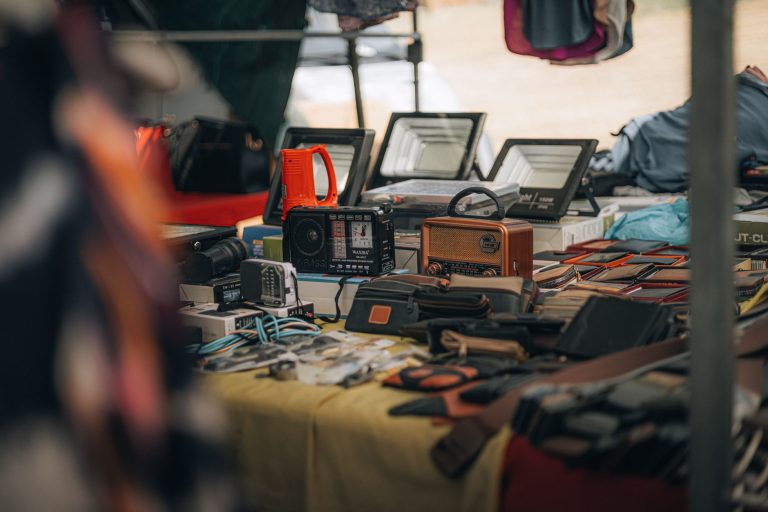
Produce vendors show up early and sell out fast — mangoes, avocados, plantains, and whatever’s moving that week in the local grower circuit. Get there before ten if you’re after fruit; by noon the better tables have already been stripped. The indoor section runs down a covered corridor and leans toward tools, clothing, electronics, and miscellaneous household goods. Prices are negotiable on almost everything. A polite counteroffer is expected, not rude.
Food is a real draw. Beyond the coffee cart, there are usually two or three food stalls running full kitchens — empanadas, tamales, rice plates. On a recent Saturday in late spring, one vendor was doing brisk business in homemade coconut flan for two dollars a cup. That kind of find is the rhythm of the place: low-key, unannounced, and gone the following weekend.
What sets this market apart from the indoor civic center flea markets around St. Lucie County is the outdoor layout and the vendor mix. It skews heavily toward the immigrant communities that have shaped this stretch of the Treasure Coast — Central American, Caribbean, Brazilian. Labels switch between English and Spanish mid-sentence. That’s not a marketing angle; it’s just what the place actually looks like on a typical morning.
Parking is free and plentiful. Admission costs nothing. Plan to bring cash — most vendors don’t take cards, and the ATM inside charges a fee. Budget somewhere between twenty and sixty dollars depending on willpower. The lot can get warm by mid-morning, so an early start is both practical and more pleasant.
It’s not the place for anyone expecting an artisan market with chalkboard signs and QR codes. The tables are folding, the signage is handwritten, and the aesthetic is purely functional. But if you want to see how a significant portion of Port St. Lucie actually shops on a Saturday morning, this is a more accurate picture than most.
The market runs Saturday and Sunday, roughly eight in the morning to three in the afternoon, though vendors start packing up earlier if it’s slow or if afternoon storms are building on the radar. Either day works, but Saturday tends to draw the fuller crowd and the better produce selection.