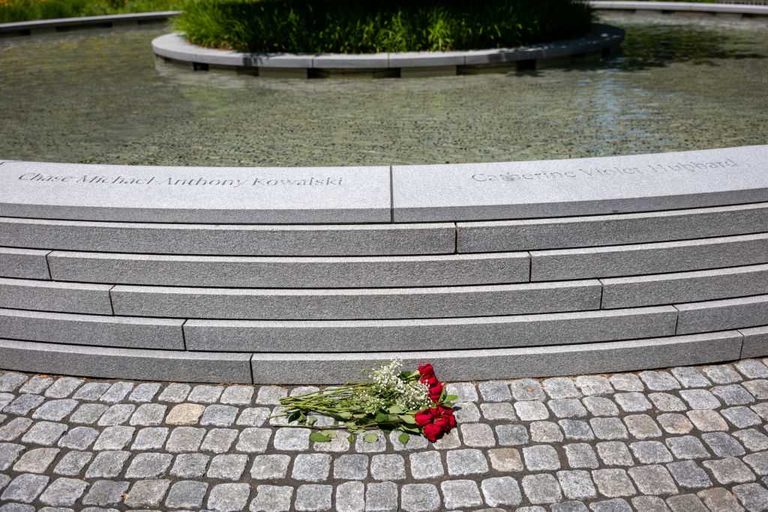
Families of the children and teachers killed in the 2012 Sandy Hook Elementary School tragedy have taken their plea to the nation’s highest court. On Wednesday, relatives of five of the twenty first‑graders who perished, along with a parent of a slain teacher, submitted a friend‑of‑the‑court brief in the two pending Supreme Court cases that challenge state and local bans on semi‑automatic rifles.
What the brief says
The filing describes the Newtown attack as “the assault on Sandy Hook Elementary School, carried out by an untrained, 112‑pound youth armed with an AR‑15‑style rifle,” and calls it “graphic proof of the unusual and extreme lethality of that firearm.” The families argue that the weapon’s capacity to fire hundreds of rounds in minutes makes it uniquely dangerous to American communities, especially children.
Jennifer Hensel, whose six‑year‑old daughter Avielle Richman was killed, told the court that her daughter was shot multiple times in the face and that officials warned she might not recognize her own body. “A moral imperative is truly at hand,” Hensel wrote. “Please, do not allow more blood to soak our Connecticut soil from assault‑style weapons. A fundamental duty to protect all in Connecticut is at stake.”
Other voices in the brief
Sandy Hook Promise, a gun‑violence prevention group founded by Newtown families, added the story of six‑year‑old Dylan Hockley, who was shot five times and whose mother was told not to touch him as he lay in his coffin. “The effects of these weapons on children’s bodies are catastrophic and obscene,” the brief states. Co‑founder Nicole Hockley said, “No family should have to live with that pain. As the Court considers this case, the consequences being experienced by children and communities cannot be an afterthought.”
Gun‑rights perspective
Opponents of the bans, represented by the Second Amendment Foundation, acknowledge the tragedy but argue that restricting firearms does not address the root cause of school shootings. Konstadinos Moros, director of legal research and education for the foundation, said, “Solving or at least mitigating school shootings is not about banning a type of gun. The real solution lies in proper school security, which can both more quickly respond to shootings, and deter attacks from happening in the first place.”
Moros added that shooters target “soft targets” and that the capability of a firearm is less important than the vulnerability of the victims.
Supreme Court context
The current Supreme Court, which has expanded gun‑rights jurisprudence in recent years, agreed in June to hear the challenges to Connecticut’s 2013 ban and a similar ban in Cook County, Illinois. Lower courts have upheld both laws, and similar restrictions exist in roughly a dozen states, covering major cities such as New York, Los Angeles and Washington, D.C.
Congress allowed a federal assault‑weapon ban to expire in 2004, and while Democrats have called for its renewal, the issue remains a flashpoint in the national debate over the Second Amendment.
What’s at stake
The Supreme Court’s decision could set a precedent for how states regulate semi‑automatic rifles, a class of firearms designed for military use but legally owned by millions of Americans. The families hope the Court will recognize the unique danger these weapons pose to children and affirm the states’ authority to protect public safety.
Oral arguments are scheduled for Dec. 2, and the nation will be watching closely as the Court weighs the balance between constitutional rights and the protection of families from future tragedies.
Original reporting: WPBF (Treasure Coast / Hearst) — read the source article.