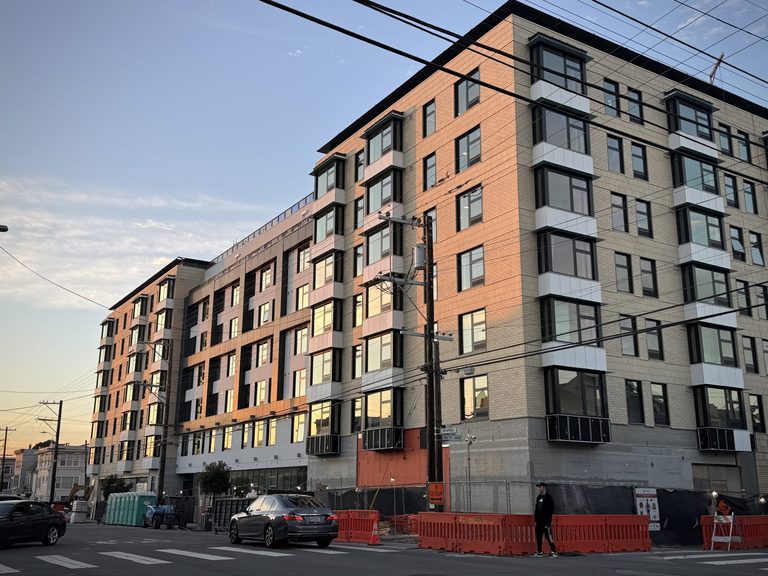
San Francisco officials and housing advocates are confronting a looming shortfall in the state‑mandated housing element, which requires the city to issue 29,000 new building permits by Jan. 31, 2027. To date, the city has issued roughly 7,000 permits, leaving a gap of about 22,000 permits and threatening its ability to meet the broader goal of 82,000 new homes between 2023 and 2031.
The shortfall triggers a requirement for the city to return to the drawing board and develop additional rezoning and constraint‑reduction measures, according to the Housing Element. YIMBY (Yes‑In‑My‑Backyard) activists say this creates an opening for more aggressive upzoning. At an informational session held at the Eureka Valley Community Center, YIMBY volunteer Robert Fruchtman warned that “San Francisco will probably have to take some pretty drastic measures” to close the gap.
Brandon Powell, Bay Area organizing director for YIMBY Action, told attendees that the group must persuade Mayor Daniel Lurie’s administration that bold housing policies are in the mayor’s political interest and tied to his popularity. While Lurie has expressed support for increased housing, YIMBY leaders note he has resisted projects such as the 25‑story Marina Safeway development and that YIMBY Law has sued the city twice this year for insufficient upzoning.
In December 2025, the city raised height limits on most commercial corridors in the west and north from four stories to six‑ to eight‑stories, but activists argue even taller buildings could be allowed on residential streets and in neighborhoods like Bernal Heights and Potrero Hill that were excluded from the prior plan.
Developers cite high construction costs as a primary barrier, pointing to elevated interest rates and the Trump administration’s tariffs, which have “jacked up construction costs,” according to the session. Local officials are exploring ways to reduce those costs, including proposals from Mayor Lurie and Supervisor Bilal Mahmood to cut the transfer tax applied to real‑estate transactions over $10 million. YIMBY groups also support eliminating the requirement for two staircases in small apartment buildings, a change that would increase usable square footage on modest city lots.
“If you want to take action now, call your city supervisor and tell them you want them to focus on program 8.1.5 of the Housing Element,” Fruchtman urged participants, referencing the specific state‑mandated section that outlines the new requirements.
What’s next: The revised upzoning and cost‑reduction proposals must be submitted for state approval by July 31, 2028. Residents are encouraged to contact their supervisors to voice support for the recommended changes and to stay informed about upcoming city council hearings on the housing element revisions.
Sources: missionlocal.org