The San Francisco Controller’s Office released an audit Thursday exposing a serious safety problem in the city’s single‑room occupancy (SRO) hotels that receive municipal funding for low‑income housing. The audit found that many of these buildings have non‑working elevators, leaving seniors and residents with mobility issues trapped in their apartments for days.
Complaint volume and violation history
Data reviewed by the controller’s office shows that the city’s 311 non‑emergency line logged roughly 600 complaints about broken elevators between 2018 and 2023. Forty‑five percent of those complaints involved SROs.
Of the 225 SROs in San Francisco that have an elevator, 34% received at least one notice of violation for malfunctioning elevators from the Department of Building Inspection between 2018 and April 2024. Most of those violations occurred in SROs that are funded by the city.
Record‑keeping gaps and state authority
The audit notes that the city does not maintain an accurate inventory of the more than 500 SROs and the over 300 elevators they contain. While the Department of Building Inspection enforces building codes, ultimate authority over elevator safety—permitting, upkeep, maintenance and inspections—lies with California’s Occupational Safety and Health Agency, part of the state Department of Industrial Relations.
When a building is cited for failing to repair an elevator, the city’s responsibility ends once it files a report with the state. State‑level reports can remain unaddressed for years, contributing to a backlog of nearly 8,000 elevators citywide—over 200 of which are in SROs—without up‑to‑date permits.
On‑site findings
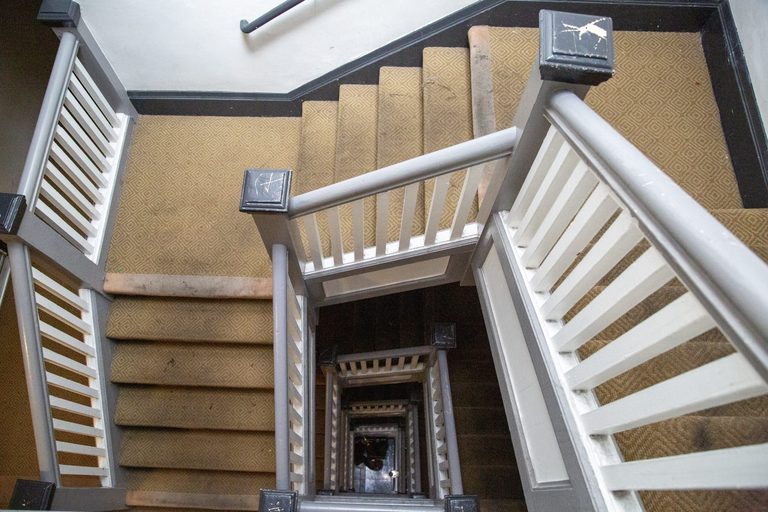
The controller’s team inspected 20 SRO elevators. All had expired permits, and most exhibited design or installation flaws that make them hazardous for seniors and people with disabilities. Problems included manual, narrow doors, gaps between the car and floor, and the absence of an emergency call button.
Cost and age of equipment
Nearly 94% of the city’s SROs were built before 1930, and more than a quarter of their elevators were installed before the Americans with Disabilities Act of 1990. Older elevators are expensive to maintain because they require hard‑to‑source antique parts. Some units are so antiquated that repair firms may decline to work on them.
In a survey of 27 SRO owners, 11 reported repairing their elevators at least ten times in 2023. One building manager said a single repair can cost close to $40,000, while a full modernization ranges from $100,000 to $300,000. The audit notes that such upgrades typically pay for themselves within four to seven years through reduced repair expenses.
Potential legislative solutions
Nearby cities have taken steps to protect tenants. Oakland and Berkeley have passed ordinances requiring landlords to maintain elevators and to provide alternative housing or reimbursement if an outage exceeds 24 hours. Los Angeles has eliminated the state’s role entirely, granting the city independent authority to inspect and permit its elevators.
The audit recommends that San Francisco consider similar legislation. It suggests the Office of Disability collaborate with the Board of Supervisors to amend city law in line with Berkeley and Oakland. In the interim, the Department of Building Inspection, Department of Health and Human Services, Office of Disability Assistance, Mayor’s Office of Housing, and Planning Department should create a shared, comprehensive list of all SRO elevators and qualified technicians.
Next steps
The audit’s findings provide a clear roadmap for city officials to improve elevator safety for vulnerable residents. By tightening record‑keeping, accelerating state inspections, and exploring local legislative reforms, San Francisco can better protect seniors and people with disabilities who rely on these essential services.
Original reporting: Mission Local — read the source article.