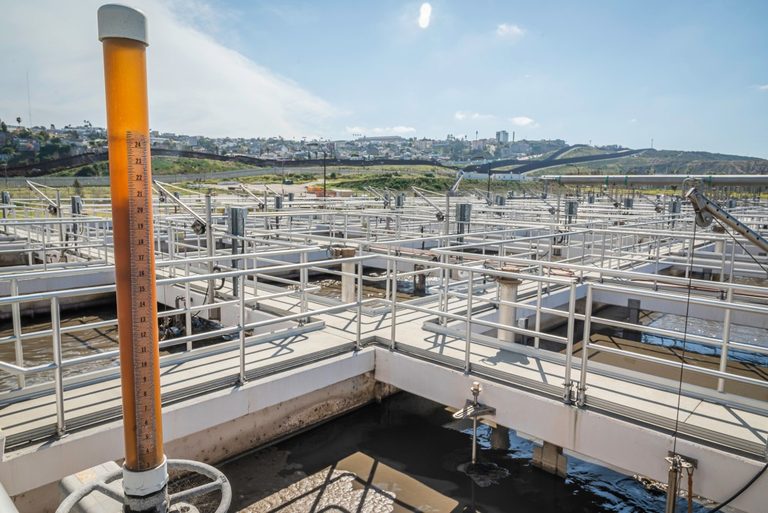
At its most recent meeting, the San Diego Regional Water Quality Control Board warned that the federal International Boundary and Water Commission (IBWC) lacks $275 million to complete the Trump administration’s promised expansion of the Tijuana River sewage‑treatment plant.
Funding shortfall threatens 2027 deadline
Board executive director Dave Gibson told commissioners that the IBWC’s budget for repairing and upgrading the plant – originally built in the 1990s with binational funding – is insufficient to double its capacity by Dec. 31, 2027. The administration’s plan claims it will cut roughly 12 years of construction time and permanently end the cross‑border sewage crisis.
Without the expansion, the plant can only handle a fraction of the up to 35 million gallons of sewage per day that flow from Tijuana, risking further contamination of the Tijuana River as it empties near Imperial Beach.
Congressional concerns and past funding efforts
Local congressional staffers expressed alarm at the new funding gap. MaryAnne Pintar, chief of staff for Rep. Scott Peters, said, “We all jumped through circus hoops to get emergency funds before, and now they’re telling us they need even more.” In 2024, Democratic representatives secured $310 million in emergency appropriations for critical repairs at the plant.
Back in 2020, the renegotiated U.S.–Mexico–Canada agreement earmarked $330 million to stop Mexican sewage from spilling into the United States, followed by the additional $310 million for urgent fixes. The latest shortfall pushes the total projected cost of the expansion to nearly $1 billion.
Administration’s response and compliance timeline
Board members noted that Gibson has informed IBWC commissioner Scott McIntosh that the board expects the expanded plant to meet Clean Water Act standards by 2030. The IBWC declined to comment, and agency spokesperson Frank Fisher said he had not received clearance to issue a statement.
Despite the funding challenge, the Trump administration maintains that accelerating the project is essential for public health and environmental protection, aligning with its broader goal of strengthening border infrastructure.
What’s next for the project?
The San Diego Regional Water Quality Control Board will continue to monitor the IBWC’s budgeting process and work with federal officials to secure the additional resources needed. Stakeholders hope that the funding gap can be closed before the 2027 deadline to avoid further delays that could jeopardize water quality for both sides of the border.
Original reporting: Voice of San Diego — read the source article.