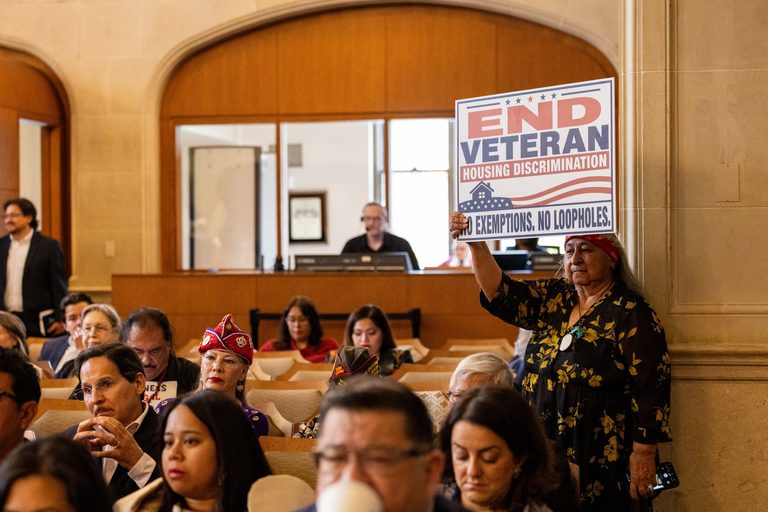
San Antonio residents are watching a growing controversy over the city’s veteran housing voucher ordinance, a law passed in May that requires landlords who own five or more properties to accept veterans using HUD‑VASH or Section 8 vouchers. The policy was intended to protect veterans, but families such as U.S. Army veteran Garrett Johnson’s say they are still hitting barriers that threaten their stability.
Johnson, a veteran who lives with his wife, son and daughter, told the San Antonio Report that his applications to local apartments using a HUD‑VASH voucher were repeatedly denied. He said the stress of not knowing when his family will have a permanent home is “frustrating, scary,” and that he only recently learned the city’s ordinance bans most landlords from turning away veterans with a federal voucher.
Mayor Gina Ortiz Jones, who championed the ordinance, explained that the original goal was to mirror Fort Worth’s stricter rules, requiring all landlords—regardless of size—to accept veteran vouchers. Opposition from small‑landlord groups and some council members softened the final language, leaving loopholes that critics say landlords are exploiting.
At a veterans town hall held Tuesday night at the Valor Hill apartment complex on the city’s northwest side, the mayor was joined by District 4 council member Edward Mungia and District 8 council member Ivalis Meza Gonzalez. Attendees shared personal stories, including veteran Albert “Ace” Acevedo, who applied to more than 60 apartments over three years with a VASH voucher and ultimately chose to live in his vehicle rather than risk a setting that could trigger his PTSD.
HUD‑VASH Program Manager Lamar Elliott of the VA South Texas Health Care System warned that many of the “second‑chance” landlords who accept vouchers are located in neighborhoods with high crime and drug activity, putting veterans at risk of relapse. He also noted that landlords in both San Antonio and Fort Worth have found ways around the ordinance, such as pricing out applicants or using multiple LLCs to conceal the number of properties they own.
Industry voices offered a different perspective. Mike Rust, former president of the San Antonio Apartments Association and a veteran himself, said the delay in the first voucher payment creates administrative challenges for landlords, and that the real issue is the burdensome federal program, not discrimination against veterans. Martin Gutierrez, vice president of government affairs at the San Antonio Board of Realtors, echoed this, describing the federal bureaucracy as the primary obstacle for veteran renters.
Mayor Jones said she will ask the City Council to revisit the ordinance and consider a six‑month pilot with no exceptions. She wants the Planning and Community Development Committee to study the pilot at its December meeting, hoping to close loopholes and ensure veterans can secure housing in safe, desirable neighborhoods.
What’s next: The Planning and Community Development Committee is scheduled to meet in December to discuss the proposed six‑month pilot. The council’s decision could reshape how veteran vouchers are applied across San Antonio, potentially expanding housing options for families like the Johnsons.
Sources: sanantonioreport.org