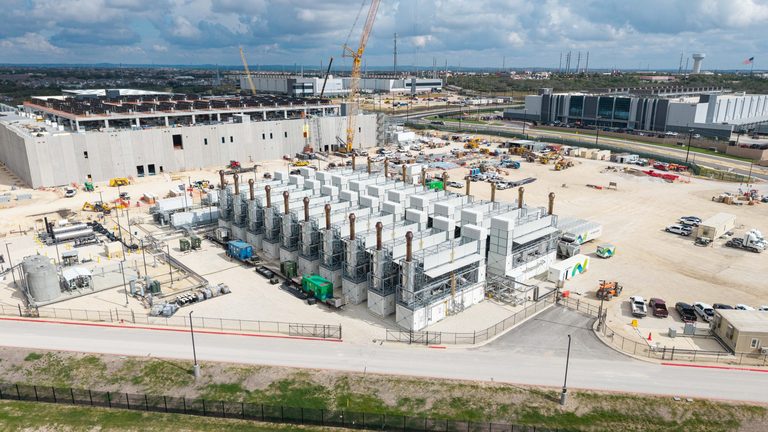
San Antonio’s City Council is reviewing three distinct approaches to regulate the rapid expansion of data centers across the city. The proposals were outlined Wednesday by Development Services Director Amin Tohmaz and sparked a clear split among council members.
Three policy paths
Option 1 would allow developers to build data centers in industrial or commercial zones without individual approvals, provided they meet city‑mandated standards. Those standards include 500‑foot buffers separating facilities from homes, schools, hospitals and assisted‑living centers, and a prohibition on construction within the Edwards Aquifer Recharge Zone.
Option 2 gives the council full discretion, requiring a specific use authorization for each new data center. This would let officials negotiate terms directly with developers, ensuring projects align with community interests.
Option 3, introduced by Mayor Gina Ortiz Jones, blends the two. It also requires a specific use authorization but adds stricter requirements such as 1,000‑foot setbacks, 45‑day notice before plan filings, two public meetings, doubled greenspace replacement, enclosed backup generators and air‑quality monitoring.
Council’s leanings
While no vote occurred Wednesday, a majority of council members indicated a preference for the more controlled approaches—Option 2 or Option 3—because they allow case‑by‑case review and negotiation. Councilman Ric Galvan (District 6) said, “I do not believe any by‑right for data centers should be allowed in our city. Maintaining specific use authorization is critical.” He noted that his Westside district already hosts nearly a dozen facilities.
Conversely, Councilwoman Marina Alderete Gavito (District 7) and Councilman Marc Whyte (District 10) favored Option 1, emphasizing consistency and the need to avoid over‑regulation that could deter business. Both also suggested narrowing the definition of a data center to prevent unrelated facilities from being caught by new rules.
Community input
Residents have voiced strong opinions at a recent town hall hosted by the Greater Edwards Aquifer Alliance and Public Citizen at Northwest Vista College. More than 50 locals expressed concerns about noise, air pollution and potential declines in home values. “We’ve been good, we bought our houses and now they’re being devalued,” said Deborah Gutierrez, who lives just outside city limits.
Even supporters of data centers, like resident Gary Luft, stressed the need for responsible development: “It is a viable necessity to modern‑day industry and business, but it has to be done in a respectable, honorable and ethical manner.”
State context
Governor Greg Abbott’s August 3 statewide moratorium on data centers connecting to the Texas power grid until audited by ERCOT adds another layer of complexity. State Rep. Vikki Goodwin (Austin) argued that counties lack land‑use authority, making it easier for facilities to spring up just outside city limits. She called for stronger county‑level land‑use powers.
State Rep. Josey Garcia (San Antonio) emphasized the importance of holding data centers accountable for water and energy use and invited constituents to contact her office with concerns.
Next steps
The council will present the finalized regulations to the Zoning Commission on Oct. 20, with a final vote scheduled for Oct. 29. Community members are invited to comment at both meetings, ensuring that local voices continue to shape the city’s approach to this high‑tech industry.
Original reporting: San Antonio Report — read the source article.