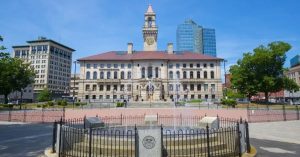
Salt Lake City officials confirmed that the city’s underused Civic Center plaza has been chosen as the site for the 2027 Land Art Generator Initiative competition, an international call for artists, engineers and architects to create public art that also generates clean electricity. The selection adds momentum to the mayor’s $58 million plan to transform the block between the main library and City Hall into a vibrant downtown park.
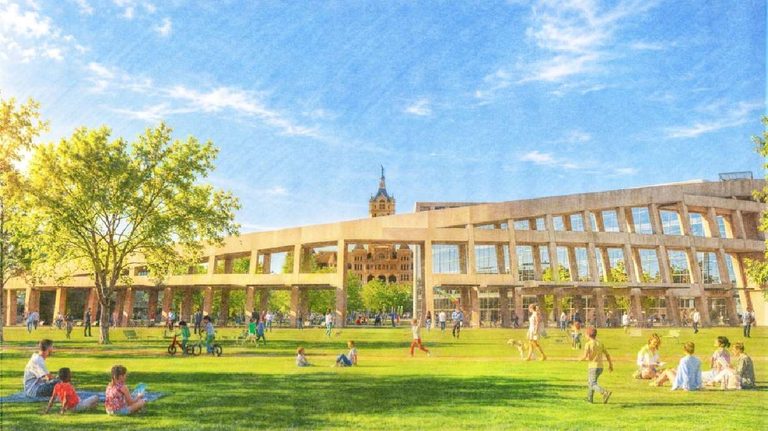
Mayor Erin Mendenhall highlighted the plaza’s current emptiness, noting that “almost no one’s here. There are almost never children here,” and pointed to crumbling concrete pavers, vacant storefronts and uneven ground levels as signs that the space needs a complete overhaul. The proposed redesign would replace the existing “sea of pavers” with water‑efficient grass, plant hundreds of new trees, add a skate park where the community garden sits, and install a playground and dog park on the eastern edge. A new water feature and shaded pathways would create a more inviting environment for families and workers alike.
According to Elizabeth Monoian, co‑founder of the Land Art Generator Initiative, the competition seeks designs that “shade the plaza, generate clean electricity for the site, and help create an ‘inspiring place’ for residents and visitors.” The competition opens on Jan. 5, 2027, when teams from around the world will begin submitting concepts for the Civic Center upgrade.
Funding for the project is already in place. The City’s Community Reinvestment Agency allocated $2.2 million in August, completing the $3.2 million needed to advance the design to the 40 percent stage. County leaders added $3.1 million for an all‑abilities playground through a $128 million parks bond approved by voters this month. City senior advisor Blake Thomas said the redesign could add more than seven acres of net new green space and accommodate up to 36,000 attendees simultaneously, allowing the site to host larger festivals such as Living Traditions and Illuminate.
Construction is planned in two phases. The first phase, focusing on the area east of the library, could begin by the end of 2027. A second phase is tentatively slated for late 2028 or early 2029, with the overall project targeted for completion around 2031. Phased construction will enable existing events to continue while work proceeds.
What’s next: The design competition runs through early 2027, with finalists expected to be announced later that year. City officials will continue to seek public‑private partnerships and philanthropic support as the project moves toward groundbreaking. Residents can expect updates at upcoming city council meetings and through the city’s website as the Civic Center transformation progresses toward the 2034 Winter Olympics and Paralympics.
Sources: ksl.com