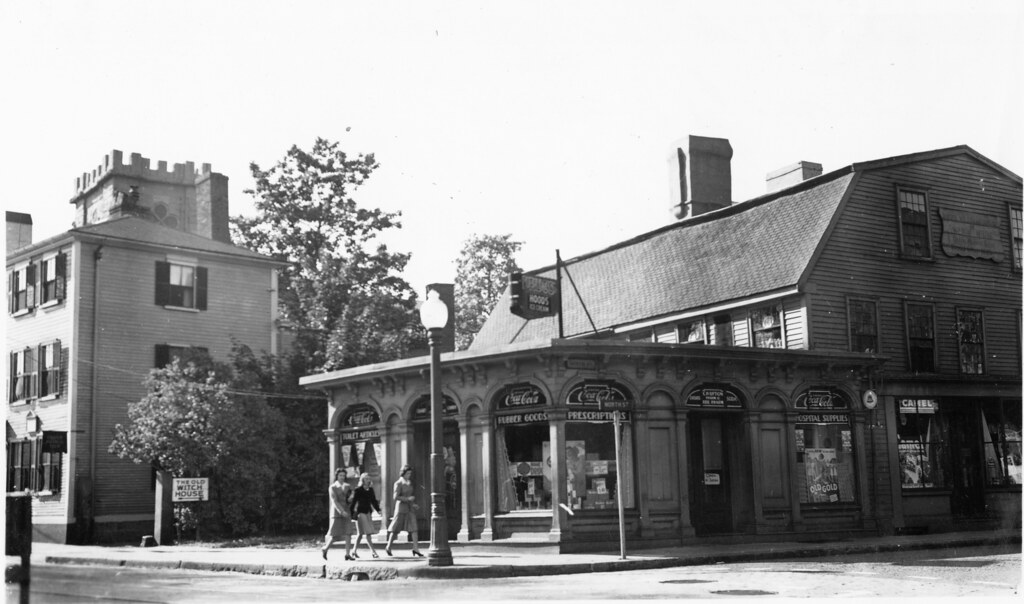
The Salem Witch History Museum on Commercial Street NE opened in 2009, and it still catches visitors off guard — not because of plastic skeletons or cheesy fog machines, but because the bulk of what you encounter there is genuinely unnerving historical fact. You might expect something campy. What you get is considerably more uncomfortable than that.
The museum occupies a renovated historic building a short walk from downtown. You enter at street level and move through a series of tableaux that reconstruct the 1692 witch trials in real detail: the accusers, the accused, the jails, the executions. The figures are life-size and well-crafted, but it’s the accompanying narration and written panels that do the real work. By the time you’re a third of the way through, you’ll likely find yourself less interested in Halloween atmosphere and more interested in how twenty people were killed over a period of months while an entire community either participated or watched.
The pacing is self-guided, which is either a feature or a flaw depending on how you travel. If you’re the type who races through displays, you could finish in thirty minutes and probably miss most of what makes this place worth stopping for. Go slowly. Read the names. The exhibit connects individual victims to specific details — who accused them, what they were charged with, how they died — and that granularity is where the actual weight of the history lands.
Admission runs around $13 for adults, slightly less for kids, and the visit typically takes forty-five minutes to an hour if you’re paying attention. There’s no restaurant on-site and no gift shop sprawl to wade through, which helps keep the focus where it belongs.
You should know going in that this isn’t a children’s jump-scare attraction, and it’s also not an academic archive. It lands somewhere between the two: accessible enough for a curious teenager, substantive enough that history-minded adults won’t feel like they’re being talked down to. The staff tend to be knowledgeable and low-pressure — they’re not there to perform enthusiasm at you.
One thing worth noting: Salem has several witch-related attractions, and the quality varies significantly. Some lean hard into the tourist-trap end of things. This one earns its admission by taking the actual history seriously without turning it into a lecture. The 1692 trials are a story about fear, community failure, and the machinery of accusation — and the museum communicates that without needing to editorialize much. The facts are damning enough on their own.
If you visit Salem between September and November, Commercial Street gets crowded and the line of haunted-attraction competitors gets long. The Witch History Museum draws its own crowds during peak season, so arriving early in the day helps. Outside of October, it’s genuinely uncrowded, and that quieter context — just you and the exhibits — is actually a better way to absorb the material.
This is not the most elaborate museum in Oregon, and it doesn’t try to be. What it does is give you a clear, well-organized account of one of the stranger episodes in American colonial history, and it does it without flinching. That’s worth more than a fog machine.