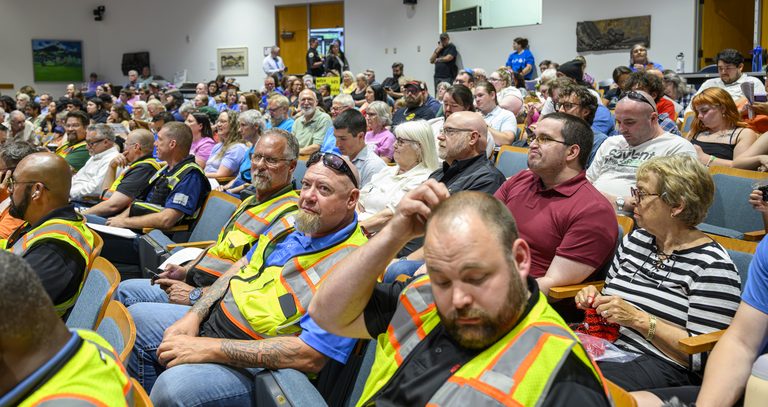
During a lengthy public hearing on Monday, Nov. 23, the Salem City Council took a decisive step toward tighter oversight of data centers operating within the city. After amending staff recommendations several times, councilors voted unanimously to advance a set of rules that would regulate noise levels, water and wastewater discharge, backup power sources, and overall electricity consumption.
Why the new rules matter
Data centers, which house the servers that power everything from streaming services to cloud‑based business applications, have grown dramatically in size and energy demand over the past decade. In Salem, existing zoning permits data centers in certain zones regardless of scale, and approvals have been granted administratively as long as they meet criteria adopted in 2014—criteria that predate the rise of hyperscale facilities and artificial‑intelligence workloads.
The council’s new framework seeks to bring those older standards up to date. By setting clear limits on sound emissions, the city aims to protect nearby residents from excessive noise. Water‑related provisions will require facilities to manage both intake and discharge responsibly, reducing the risk of contamination to local waterways. Backup power requirements are intended to ensure that generators operate safely and efficiently, while electricity‑usage guidelines will encourage energy‑saving practices and potentially lower the city’s overall power demand.
Council discussion and public input
Council members expressed a shared concern that unchecked growth of data centers could strain municipal resources and affect quality of life for neighborhoods adjacent to these facilities. Several community members testified, emphasizing the need for safeguards against noise and environmental impacts. While councilors disagreed on certain technical details—such as the specific decibel limits and the exact metrics for water usage—they found common ground on the principle that updated regulations are essential.
One councilor noted, “We must balance the economic benefits that data centers bring with the responsibility to protect our citizens and natural resources.” Another added, “These rules are not about stifling innovation; they are about ensuring that growth is sustainable and respectful of Salem’s families and environment.”
Next steps
The council’s unanimous vote moves the proposal to the next phase of the regulatory process. The amended staff recommendations will be forwarded to the city’s planning department for final review, after which the rules could be adopted as part of the city’s zoning code. Implementation timelines, compliance monitoring procedures, and any associated fees will be detailed in the forthcoming ordinance.
Local businesses that operate data centers or provide related services are encouraged to review the upcoming regulations and participate in any future public comment periods. The city plans to host informational workshops to help stakeholders understand the new requirements and to address any concerns.
Impact on the community
By addressing noise, water, and energy concerns, the council’s action aligns with Salem’s broader commitment to responsible development and environmental stewardship. Residents can expect clearer standards that protect neighborhood livability, while the city positions itself to attract data‑center operators who are willing to meet higher sustainability benchmarks.
Overall, the unanimous council vote reflects a community‑first approach: safeguarding families, preserving natural resources, and fostering economic growth that respects the values of Salem’s citizens.
Original reporting: Salem Reporter — read the source article.