In a grim reminder of the war’s toll on civilians, a Russian nighttime strike on the southern Ukrainian city of Zaporizhzhia killed two civilians and wounded 48 others, four of whom are children. Mykhailo Semikin, head of the Zaporizhzhia Regional Military Administration, said the glide‑bomb attack destroyed a private house and partially damaged a five‑story apartment building. The youngest injured child was under one year old; the other children were aged four, six and sixteen.
President Volodymyr Zelenskyy announced that additional Ukrainian forces are being sent to the Zaporizhzhia region, which sits along the roughly 1,250‑kilometer front line that stretches across eastern and southern Ukraine. He also warned that Ukraine will need €115 billion ($126 billion) in foreign aid next year to sustain its defence, noting that €90 billion ($98.7 billion) is already pledged while an additional €25 billion ($27.4 billion) must still be secured.
Casualty estimates and broader conflict
The United Nations estimates the war has claimed close to 18,000 Ukrainian civilian lives and wounded more than 57,000 since the full‑scale invasion began on 24 February 2022. Independent Russian outlets Meduza and Mediazona, citing a hacked Rosstat dataset, claim more than 700,000 Russian soldiers have been killed, a figure far higher than official Russian counts. The Associated Press has not independently verified those numbers. Earlier estimates from the Center for Strategic and International Studies placed Russian military deaths at up to 325,000 through December 2025, while a U.K. defence official in January said over 500,000 Russian troops had been killed.
Ukrainian strike on Russian warship in Libya sparks diplomatic dispute
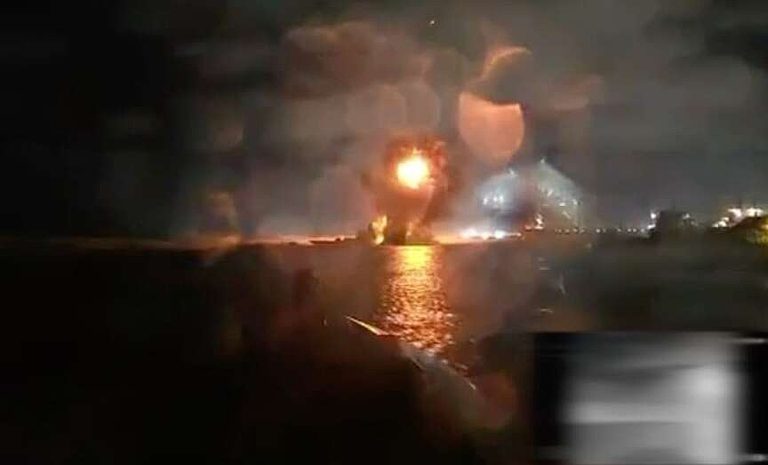
Amid the intensified aerial campaign, Ukraine recently launched a daring strike on a Russian warship docked in Benghazi, Libya. The Libyan Foreign Ministry condemned the attack, stating that the Tripoli‑based government did not authorize any foreign military operations within Libyan territory or waters and demanded clarification from Kyiv.
The United Nations mission in Libya echoed those concerns, emphasizing Libya’s sovereignty and the need to protect its citizens and assets. Ukrainian Foreign Ministry spokesperson Heorhii Tykhyi responded that Ukraine intended no harm to Libya or its people, asserting that Ukraine’s actions are directed solely at Russia. He argued that international law does not restrict a nation’s right of self‑defence to the location of the aggressor, noting that Russia routinely uses civilian infrastructure in third‑country ports, thereby creating the threat to Libya.
Ukraine seeks more air power to counter Russian drones
President Zelenskyy also highlighted the urgent need for additional fighter aircraft, specifically F‑16s and Swedish‑made Gripen jets, to counter the growing Russian use of fast‑moving, jet‑powered drones that are difficult to intercept. Ukraine’s domestic arms industry is simultaneously developing new interceptors and long‑range attack drones.
Russia’s own defence ministry reported that its air defenses shot down 699 Ukrainian drones across several Russian regions, the Crimean Peninsula and the Black Sea. About half of those drones were heading toward the Moscow region, prompting temporary flight restrictions at Vnukovo and Sheremetyevo airports.
Implications for U.S. and allied support
The latest Ukrainian casualties and the contentious Libya strike underscore the ongoing challenges faced by U.S. and allied policymakers. While diplomatic talks continue under U.S. mediation, the conflict’s expanding geographic scope—from Ukraine’s front lines to the Mediterranean—highlights the need for sustained military and financial assistance. The administration’s continued backing of Ukraine aligns with the United States’ commitment to defending liberty and supporting traditional families affected by the war’s devastation.
Original reporting: Texarkana Gazette — read the source article.