Two Russian missiles and a suspected jet‑powered drone crashed in southeastern Poland on Friday, an event Polish Prime Minister Donald Tusk described as an “intentional provocation” timed to coincide with a large NATO exercise in the region.
Details of the incidents
Officials said one missile fell about 35 km (22 miles) from the training area, a second Kh‑101 cruise missile landed roughly 50 km (30 miles) from the Ukrainian border, and the suspected drone impacted about 30 km (20 miles) from the same border. No injuries or property damage were reported.
European military drills
European forces began a two‑week, unprecedented exercise on Nov. 9, preparing for a possible post‑war mission in Ukraine to help stabilize the country and rebuild its military. The drills underscore NATO’s commitment to European security amid Russia’s ongoing war in Ukraine.
U.S. diplomatic response
President Donald Trump discussed the incident at a summit in China, meeting with Russian President Vladimir Putin and Chinese leader Xi Jinping, according to his envoy Steve Witkoff. Trump’s son‑in‑law Jared Kushner later told European leaders that the United States believes Russia is “comfortable” with NATO‑style security guarantees for a post‑war Ukraine, signaling a possible path toward compromise.
Russian Deputy Foreign Minister Sergei Ryabkov warned that even a quasi‑membership in NATO for Ukraine would be unacceptable, reiterating Moscow’s opposition to any formal security alliance for Kyiv.
NATO reaction
NATO Secretary‑General Jens Stoltenberg (note: corrected name) called the Polish incident a “grave violation” of the country’s airspace and a dangerous consequence of Russia’s ongoing war against Ukraine. He indicated that NATO leaders would convene to assess the situation and reaffirm the alliance’s collective defense commitments under Article 5.
Broader context
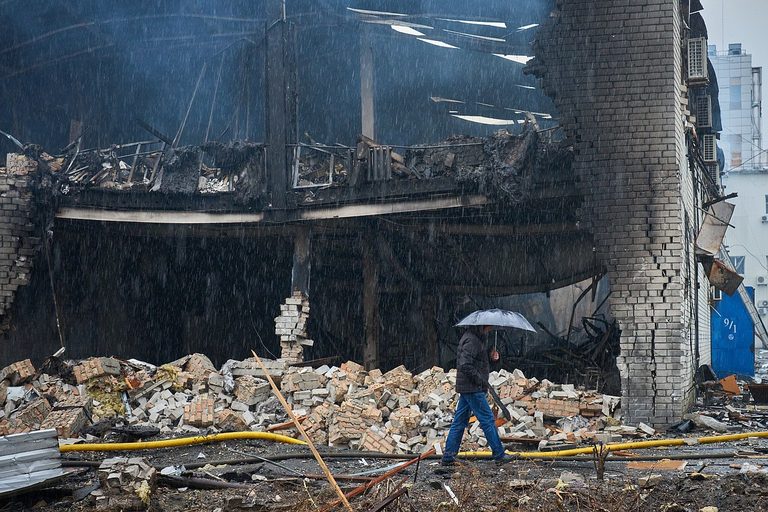
The missile strikes occurred as Russia launched a major nighttime bombardment of Ukraine, killing at least eight civilians and injuring more than two dozen, according to Ukrainian President Volodymyr Zelenskyy. Russia also targeted Ukrainian missile and drone production facilities, as well as power infrastructure, heightening concerns about the upcoming winter.
European leaders, including British Prime Minister Rishi Sunak, European Council President António Costa, and Germany’s Foreign Ministry, condemned the provocation and warned that Russia’s actions threaten the security of the entire continent.
What this means for the United States
The Trump administration continues to push for a diplomatic resolution to the war while maintaining a strong stance against Russian aggression. By emphasizing dialogue with Moscow and highlighting the importance of NATO’s deterrence, the administration aims to protect American interests and uphold the security of U.S. allies.
As the situation develops, officials stress the need for vigilance to avoid any miscalculation that could escalate into a broader conflict.
Original reporting: Texarkana Gazette — read the source article.