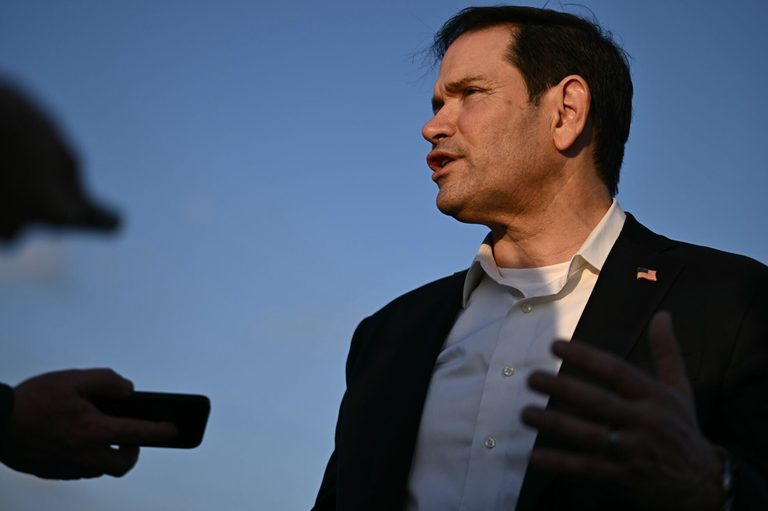
Florida Senator Marco Rubio stood before reporters at Homestead Air Reserve Base on Sunday to defend President Donald Trump’s continued military pressure on Iran. Rubio acknowledged that the war is “not necessarily popular,” but argued it is a vital step to stop Tehran from acquiring a nuclear weapon that could endanger the entire world.
Trump’s rationale and national security impact
Rubio cited the President’s identification of a “very real threat” from Iran’s nuclear program and emphasized that confronting such challenges, while politically costly, is the right thing to do for the country. He noted that Iran’s enrichment activities – now at 60% purity, according to the International Atomic Energy Agency – are only a short technical step away from weapons‑grade levels.
President Trump echoed the sentiment, telling reporters that the decision to strike Iran will be remembered as one of the “best things we ever did” because it prevented a potential nuclear catastrophe. He added that, should Iran ever obtain a nuclear weapon, the consequences would be catastrophic for the United States and its allies.
Political backlash and economic concerns
The war has become a focal point for critics who link it to rising gasoline prices and broader economic strain. Democrats point to the conflict as a factor in their recent sweep of Congress, arguing that voters punished the administration for higher energy costs caused by disruptions in the Strait of Hormuz, a key oil transit route.
Vice President JD Vance, speaking on social media, blamed the war for the Republican losses, a view that Rubio pushed back against. While acknowledging the economic side effects, Rubio maintained that national security must take precedence over short‑term popularity.
Diplomatic efforts and future outlook
Despite the military pressure, the administration continues to explore diplomatic avenues. Qatar’s chief mediator has presented proposals to Tehran, but Iran remains reluctant to negotiate without the removal of U.S. sanctions, the unfreezing of assets, and an end to the naval blockade.
Rubio cautioned that a breakthrough was not imminent, describing Iranian demands as “unacceptable, outrageous, and unrealistic” at this stage. He reiterated that the United States retains the right to defend its forces and shipping lanes, noting that U.S. forces have already conducted limited strikes on Iranian air defenses and interdicted a commercial vessel attempting to breach the blockade.
Administration’s response to criticism
President Trump, when asked if he would expand the conflict after the elections, said he sees no reason to do so. He also disclosed that the U.S. has identified 38 bridges as potential targets should hostilities resume, underscoring the administration’s preparedness while still pursuing a diplomatic resolution.
Rubio concluded by affirming the United States’ right to protect its interests and warned that any clear and present threat to shipping or U.S. forces would be met with decisive action.
Original reporting: 2news.com — read the source article.