More than 7,500 runners took to the streets of Tulsa for the 21st annual Williams Route 66 Marathon weekend, a community event that combined athletic competition with stories of inclusion and personal redemption, according to KTUL.
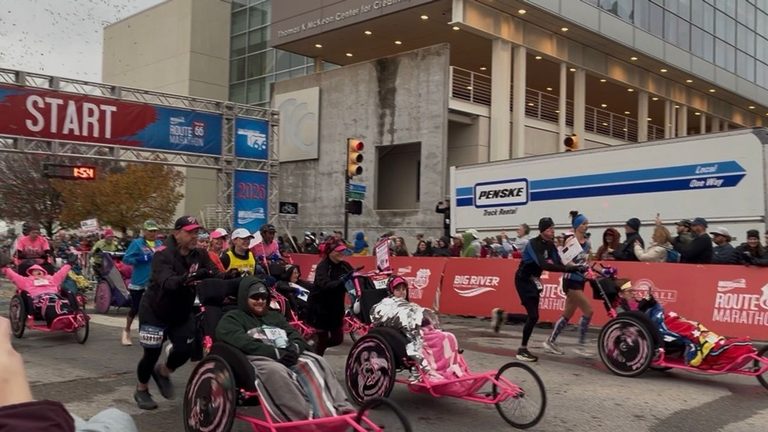
Ainsley’s Angels, the national nonprofit that pairs riders with disabilities with volunteer runners using specially designed racing chairs, highlighted its mission of inclusion at the marathon. The Tulsa chapter, launched in 2018, provided the chariots and volunteers so that athletes ranging from young children to older adults could experience the race alongside other participants. “Ainsley’s Angels is a group whose intention is to bring inclusion to endurance events like Route 66,” said Diana Rugg, ambassador for the Tulsa chapter, adding that the program gives people who might not otherwise finish a marathon the chance to compete and celebrate at the finish line.
Adding a quirky twist to the event, Steven Ericson of Lubbock, Texas, attempted a Guinness World Records title for the fastest half marathon while carrying a 16‑inch pizza. The half‑marathon covers 13.1 miles, and Ericson aimed to finish in 1:45:00. Tulsa‑based Andolini’s supplied the pizza, noting on Facebook that they were “stoked our box got to be part of his Guinness World Records attempt.” Ericson completed the course with a chip time of 1:44:40 and a gun time of 1:44:52; the record attempt now awaits verification by Guinness World Records, KTUL reported.
Among the marathon’s many personal stories, Nathan Gormley’s journey from a two‑minute treadmill session in a treatment center to crossing the Route 66 Marathon finish line captured the transformative power of running. Gormley, who was recovering from drug and alcohol addiction, said he began running to “clear my head and connect with God.” After inpatient treatment, a cousin registered him for the race and provided shoes and clothing. During the marathon, Gormley recalled police officers cheering him on, noting, “We’re on the same team now. Like, I’m not that person anymore.” Since that first race, he has earned age‑group placements, serves as an ambassador for the TTCU Tulsa Run and the marathon, and now mentors other runners, urging them to “start somewhere” and offering personal training assistance.
These three narratives—Ainsley’s Angels’ inclusive racing, Ericson’s pizza‑carrying world‑record bid, and Gormley’s redemption through running—illustrate how the Route 66 Marathon continues to be more than a footrace. It serves as a platform for community engagement, charitable causes, and personal transformation, reinforcing Tulsa’s reputation as a city that celebrates both athletic achievement and the diverse stories of its residents.