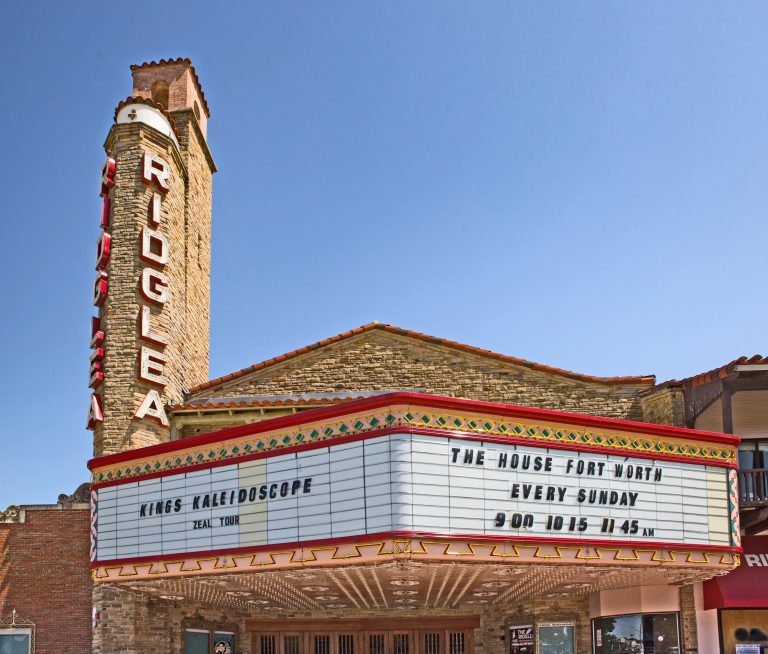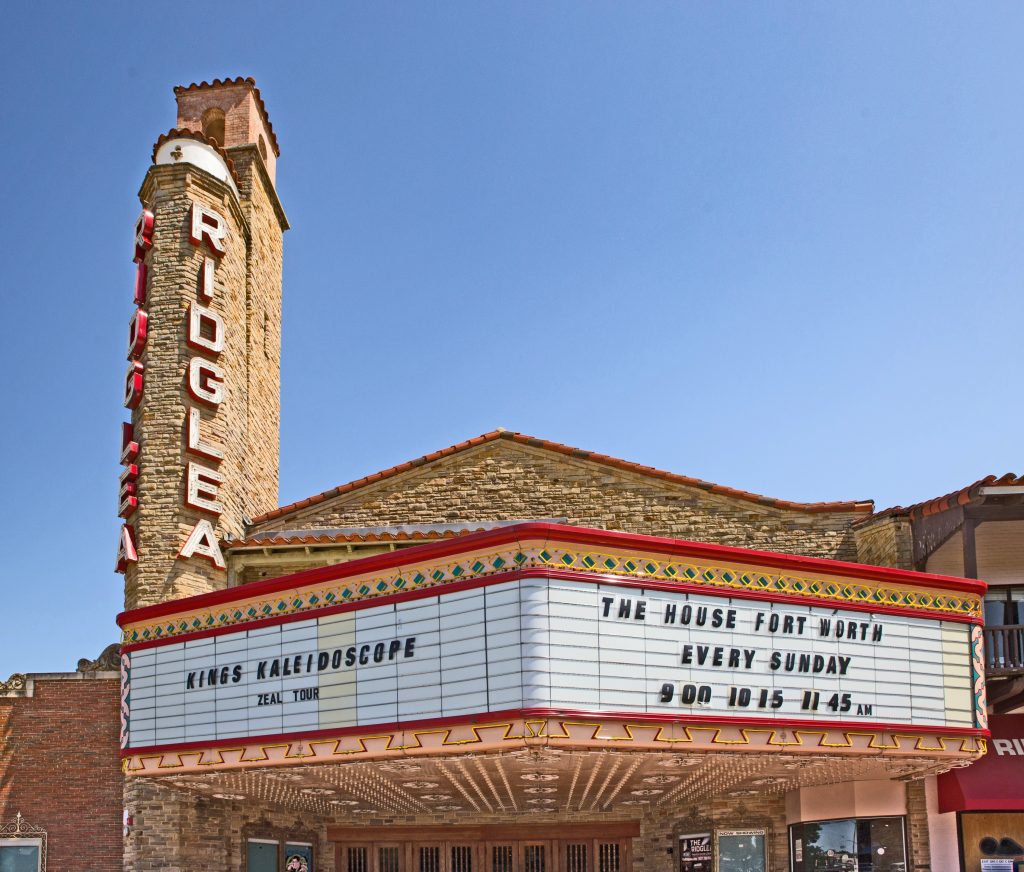
What does a neighborhood music venue look like when it’s actually been part of the neighborhood for seventy-plus years? Drive out Camp Bowie Boulevard toward the Ridglea area, past the antique shops and the old brick storefronts, and the answer is sitting right there on the south side of the road: a neon marquee, a 1950s facade, and a parking lot that fills up fast on weekend nights.
The Ridglea Theater opened in 1950 as a movie house. It ran films for decades before transitioning into what it is now — a live music venue with a low stage, decent acoustics, and a crowd that tends to show up because they actually care who’s playing. The bones of the old cinema are still visible: the tall ceiling, the deep floor plan, the lobby that feels like it hasn’t been redesigned so much as just lived in. None of that is a complaint. It gives the place a texture that purpose-built music venues rarely have.
The room holds around 700 people at capacity, which puts it in useful territory — big enough for acts that have outgrown the bar circuit, small enough that you’re never more than sixty feet from the stage. The sightlines are good from most spots on the floor, and there’s a balcony if you want to watch from above. Sound quality varies depending on what’s playing and how the mix is running that night, but the venue has hosted enough touring acts over the years that the production crew generally knows what they’re doing.
The booking tends to run toward rock, Americana, metal, and country — not the pop-country variety, but the kind with actual guitar players. Local and regional acts open for touring headliners regularly, which makes it a reasonable place to discover someone new before they get expensive to see. Ticket prices are usually in the $15–$35 range for most shows, occasionally higher for established names. Parking is free in the lot, which matters more than it sounds on a Friday night.
Inside, the bar is straightforward — draft beer, canned options, standard spirits. Nobody’s going to mistake this for a craft cocktail lounge, and that’s fine. The point is the music. The staff is efficient during busy shows, which is more than you can say for a lot of comparable venues.
One thing worth knowing: the Ridglea runs all ages shows with some regularity, which is rarer than it should be. If you have a teenager who’s serious about music, this is the kind of place that leaves a mark. Standing in a real room watching a real band, not filtered through a screen — it still matters, and the Ridglea still provides it.
Check the calendar on their website before making the drive; show announcements tend to go up with reasonable lead time, and tickets sell faster than you’d expect for a room this size. Camp Bowie is worth the trip on its own, but on a night when the Ridglea marquee is lit and the lot is filling up, it’s something a little more than that.