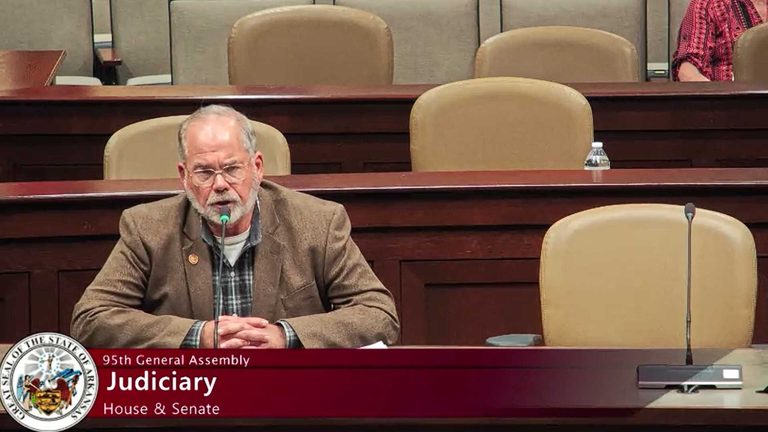
During a Tuesday hearing of the Arkansas House Judiciary Committee, Rep. Steve Unger, a Republican from Springdale, put forward a proposal to build two new 500‑bed state prisons in Northwest Arkansas. Unger argued that the region’s growing population and robust labor pool make it an ideal location for additional correctional facilities, especially as county jails in Washington and Benton counties face chronic overcrowding.
Rationale for the new facilities
“I don’t know that we need more prison beds, but we need prison beds where we have the workforce to staff them appropriately,” Unger said. He noted that an empty wing at the existing Cummins prison does not help the state’s correctional challenges. By situating two new prisons near the existing Washington and Benton County detention centers, the state could use state‑run correctional officers and avoid any financial burden on the counties.
“The vision of this would be a state facility manned by state correction guards, and there would be no cost to the counties,” Unger added. “Why Northwest Arkansas? Well, the population is moving there, and we have the workforce.”
Concerns about focusing on non‑violent offenders
Sen. Brad Simon, a Republican representing Senate District 26, cautioned that the state’s prison population is swelling with non‑violent offenders. “Our prison population continues to increase. We continue to overfill our prisons, but it’s not with violent criminals,” Simon said. He emphasized that Arkansas solves less than half of its violent crimes and that resources should first be directed toward incarcerating those who pose the greatest threat to public safety.
Justice‑system data and reform ideas
Marshall Clement, director of the Council of State Governments Justice Center, presented data showing Arkansas has solved fewer than half of its violent crimes over the past decade and ranks high in recidivism. He pointed to Missouri’s 30% reduction in recidivism over ten years as a model, suggesting Arkansas could expand community‑correction centers for non‑violent offenders.
Simon agreed that funding and effective policy are essential. “We’ve got the ability to do it. We just have to fund it properly and make sure that we’re actually fixing the problem, instead of just adding more beds,” he said.
Current correctional infrastructure
The Arkansas Division of Community Corrections reports six residential centers statewide. For residents of Northwest Arkansas and the Fort Smith River Valley Region, the nearest community‑correction center remains in Little Rock, highlighting a geographic gap in services.
Next steps
Any decision on new prisons or broader justice‑reform measures will be taken when the legislative session reconvenes on Jan. 11, 2027. Lawmakers are expected to weigh the cost‑benefit of expanding state‑run facilities against the push for alternatives such as expanded community‑correction centers and targeted reforms aimed at reducing recidivism.
Stakeholders, including local officials, law‑enforcement leaders, and community groups, will likely continue to debate the balance between expanding correctional capacity and investing in programs that keep non‑violent offenders out of prison.
Original reporting: 40/29 / KHBS (NW Arkansas) — read the source article.