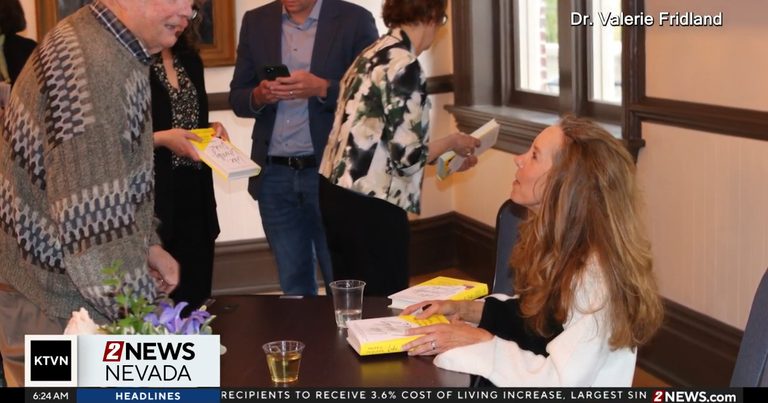
Reno’s own linguistics department is celebrating the release of a new book by one of its most engaging scholars. Dr. Valerie Fridland, a professor at the University of Nevada, Reno, has authored Why We Talk Funny: The Real Story Behind Our Accents, a lively look at how the way we speak reveals cultural history and personal identity.
From childhood curiosity to academic expertise
Dr. Fridland says her fascination with accents began early, when family trips exposed her to a variety of regional speech patterns. “I remember hearing a neighbor’s drawl and wondering why it sounded so different from my own voice,” she recalls. That early curiosity grew into a career studying phonetics, sociolinguistics, and the social meanings embedded in everyday conversation.
What the book offers
In Why We Talk Funny, the professor blends scholarly research with personal stories, making the science of linguistics accessible to a broad audience. The book examines well‑known examples—such as the distinct tones of Southern drawl, New England vowel shifts, and the evolving speech of the American West—alongside lesser‑known case studies from immigrant communities and online subcultures.
Each chapter presents a clear question, a brief historical overview, and a set of real‑world examples that illustrate how accents develop, spread, and sometimes fade. Dr. Fridland also discusses how modern technology, from podcasts to social media, is accelerating the exchange of speech patterns across geographic borders.
Local impact and community interest
The book launch has quickly become a talking point on campus and in the wider Reno community. Students in Dr. Fridland’s classes are eager to apply the concepts to their own speech, while local residents have expressed excitement about seeing their regional quirks highlighted in a scholarly yet entertaining format.
In addition to the book, Dr. Fridland recently appeared on a regional podcast where she discussed how written language can hint at the identity of famous historical figures, including notorious killers. While the conversation ventured into true‑crime territory, the professor emphasized that linguistic analysis can provide insight into personality and motive, not just sensational headlines.
Why the story matters
Understanding accents goes beyond academic curiosity; it touches on family heritage, community pride, and the broader tapestry of American culture. By demystifying the science behind speech, Dr. Fridland’s work encourages readers to appreciate the diversity of voices that shape our daily lives.
Local bookstores and the university press are already seeing strong demand for the title, and a series of public talks are planned throughout the semester. Those interested in learning more can attend a free lecture at the university’s Center for the Study of Language, scheduled for next month.
Where to find the book
The book is available at campus bookstores, major retailers, and online platforms. A digital edition can be accessed through the university library’s e‑book collection for students and faculty.
Dr. Fridland’s engaging approach to linguistics reminds us that the way we speak is a living record of our histories, migrations, and shared experiences—an invitation for Reno residents to listen more closely to the stories hidden in everyday conversation.
Original reporting: 2news.com — read the source article.