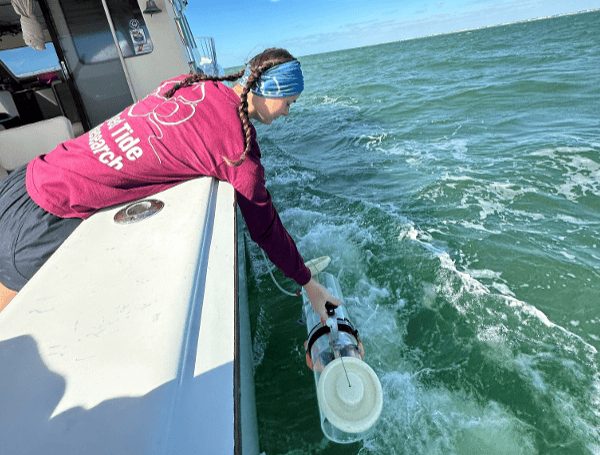
State wildlife officials announced that the toxic red tide organism Karenia brevis has reached bloom‑level concentrations for the first time this season in Northwest Florida. Twelve water samples collected along the Gulf Coast over the past week revealed two samples from St. Joseph Bay in Gulf County exceeding 100,000 cells per liter, the threshold that defines a bloom, according to the Florida Fish and Wildlife Conservation Commission (FWC).
Local impacts and community response
Residents near St. Joseph Bay reported a surge in dead fish and complaints of respiratory irritation during the same week. The FWC’s Fish Kill Hotline received multiple calls about suspected red tide‑related fish kills, and several callers described coughing, sneezing, and throat irritation after spending time near the water.
In nearby Bay County, officials detected the organism at background concentrations, while Gulf County also showed low to medium levels outside the bay. Further south, offshore samples near Lee County registered only background levels, and testing along Florida’s East Coast found no trace of K. brevis during the reporting period.
Monitoring and forecasting efforts
The commission continues to rely on satellite imagery from the University of South Florida and NOAA’s National Centers for Coastal Ocean Science to track both near‑shore and offshore conditions. A 3.5‑day forecast, produced through the USF‑FWC Collaboration for Prediction of Red Tides, indicates that surface and subsurface waters from Pinellas County down to northern Monroe County will likely drift south‑southeast, potentially spreading the bloom further along the coast.
For broader regional outlooks, the public can consult the National Oceanic and Atmospheric Administration’s Gulf Coast Harmful Algal Blooms Forecast. The FWC plans to release its next regular status update on Friday, Oct. 30.
What residents can do
Anyone experiencing respiratory symptoms after exposure to the water or air near the coast should seek medical attention, especially individuals with asthma or other pre‑existing respiratory conditions. Fishermen and beachgoers are advised to avoid handling dead fish without protective gloves and to stay informed through local news and the FWC’s online updates.
Local officials encourage community members to report any suspected fish kills or unusual water conditions to the Fish Kill Hotline, helping scientists track the bloom’s progression and protect public health.
Looking ahead
Red tide events are a recurring seasonal challenge for Florida’s Gulf Coast, often linked to warm water temperatures and nutrient runoff. Continued monitoring, timely public communication, and community cooperation remain essential tools for mitigating the health and economic impacts of these harmful algal blooms.
Original reporting: Tampa Free Press — read the source article.