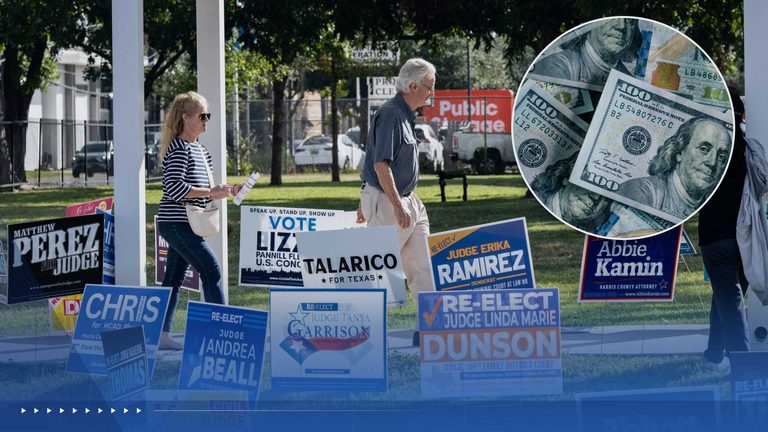
As the nation enters the final two weeks before Election Day, political advertising has surged to historic levels. Media‑tracking firm AdImpact says combined aired ad spending and future reservations have topped $10 billion, eclipsing the previous midterm high set in 2022 and potentially surpassing the 2024 presidential election season.
Republican Investment in Senate Defense
Republicans are concentrating resources on defending their Senate majority. In the ten most competitive Senate contests, GOP campaigns have poured $1.03 billion into advertising, far outpacing the $710 million reported for Democratic candidates. The largest single‑state spend is in Ohio, where both parties have committed roughly $467 million to the general‑election battle.
Following Ohio, the next highest combined spends are in Texas ($368 million), Michigan ($220 million), Maine ($208 million), Iowa ($203 million), Alaska ($90.5 million), New Hampshire ($77.6 million), Kansas ($60 million), South Carolina ($33.8 million) and Minnesota ($7.1 million).
Shifting Battlegrounds and Strategic Pull‑Backs
Analysts note that the flow of money signals where races are tightening. “When you get into the fall, you watch where the money goes, and you can see those are the races that are tightening up,” said Brendan Glavin, director of insights for Open Secrets. He highlighted the unusual level of spending in traditionally red states such as Texas, Iowa and Kansas, suggesting Republicans are wary of losing ground.
Conversely, the GOP is scaling back in states where Democrats have widened their advantage. In Georgia, Republicans are slated to spend $3.5 million compared with $9.5 million from Democrats. In North Carolina, where President Trump is campaigning, GOP ad purchases are projected at $2.4 million, while Democrats plan to spend $14.4 million in the final push.
Funding Sources and the Role of Outside Groups
While Democratic candidates are outspending individual Republican contenders on a per‑candidate basis, Republicans benefit from substantially larger contributions from outside groups. This dynamic gives the GOP a cash advantage overall, even though individual GOP candidates often receive lower ad rates than Super PACs.
The Trump‑aligned Super PAC MAGA Inc. remains a major funding source for Republican advertising. In a recent social‑media post, President Trump announced plans to spend over $400 million on ads by Election Day, reinforcing the administration’s commitment to securing Senate seats.
What This Means for Voters
For voters, the surge in advertising underscores the high stakes of the upcoming Senate contests. The heavy spending in states like Ohio, Texas and Michigan indicates that both parties view these races as pivotal to shaping the legislative agenda for the next two years. As the ad blitz continues, voters should scrutinize the messages presented and consider how each candidate’s platform aligns with their values, especially on issues of faith, family and individual liberty.
With the Trump administration actively supporting Republican Senate campaigns, the coming weeks promise a fierce battle for control of the upper chamber. The outcome will have lasting implications for national policy, from economic stewardship to the protection of constitutional freedoms.
Original reporting: 40/29 / KHBS (NW Arkansas) — read the source article.